
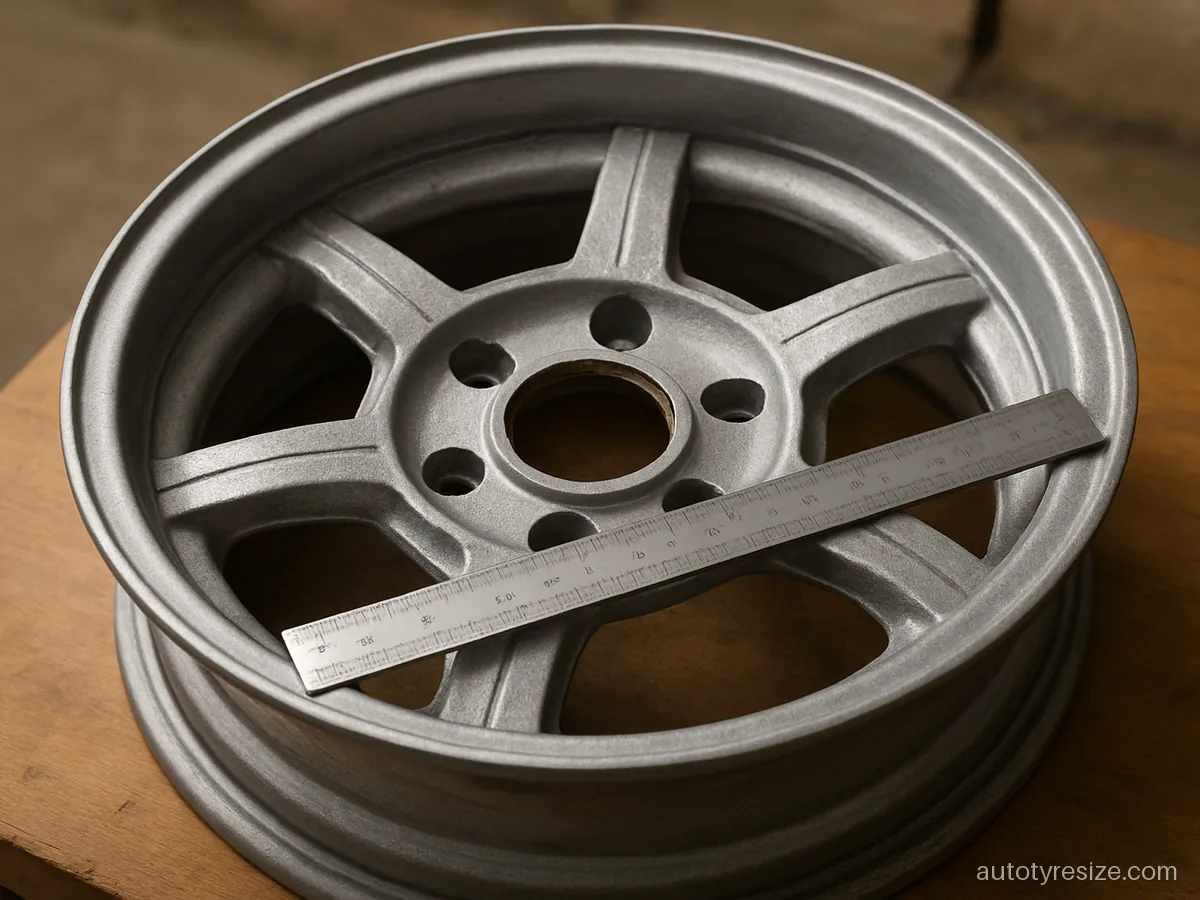
Wheel size is written like 6.5J x 16 ET45, which means a rim 6.5 inches wide, with a J shaped flange, 16 inches in diameter and an offset of 45 mm. For buying tyres you only need the diameter, but for buying wheels every part of that code matters.
People mix up wheel size, rim size and tyre size every day at the counter. This guide separates them, explains offset in plain terms, and covers trucks and bicycles too, since the same questions come up for them.
At a glance
- Example marking6.5J x 16 ET45
- 6.5Rim width in inches, between the flanges
- JShape of the rim flange; most cars use J
- 16Rim diameter in inches, same as R16 on the tyre
- ET45Offset of 45 mm from the rim centre line
- 700c bicycle622 mm bead seat diameter
Where to find the wheel size
- On the wheel: moulded into the rear of a spoke or inside the barrel, so you see it only when the wheel is off the car.
- On the tyre: the number after R, such as R15, is the rim diameter. It does not show width or offset.
- In the owner's manual: the specification table often lists wheel size and tyre size together.
Puzzled by the sidewall code? Our tyre size reading guide breaks it down.
Wheel size vs rim size vs tyre size
| Term | Example | What it tells you |
|---|---|---|
| Rim size | 16 inch | Diameter of the wheel where the tyre seats |
| Wheel size | 6.5J x 16 ET45 | Width, flange, diameter and offset |
| Tyre size | 215/60 R16 | Tyre width, sidewall ratio and rim diameter |
In the shop, people say rim size when they mean diameter only. Any R16 tyre seats on a 16 inch rim of suitable width; however the wheel must also fit the car. That is where width, offset and bolt pattern come in.
Rim width and the J letter
Rim width is measured inside, from one flange to the other, not across the outer edges. A wider rim spreads the tyre and makes the sidewall stand straighter; a narrow one pinches it. Each tyre size has a range of rim widths it is approved for, so a fat tyre squeezed onto a slim rim is a bad idea. The J describes the shape of the flange that holds the tyre bead. Most cars use J; some off road wheels use JJ.
Wheel offset in plain words
Offset, marked ET, is the distance in millimetres from the centre line of the rim to the face that bolts onto the hub.
- Positive offset (ET40, ET45): the mounting face is toward the outer side, so the wheel sits tucked into the arch. Most cars use this.
- Zero offset (ET0): the mounting face sits right on the centre line.
- Negative offset (ET-12): the mounting face is toward the inner side, so the wheel pokes out. Common on aftermarket wheels for off roaders.
Changing offset changes where the tyre sits. Too little offset and the tread can catch the arch lip; too much and the inner sidewall can touch the suspension or brake caliper. It also changes the leverage on wheel bearings and steering.
Offset wheel on truck and pickup
On trucks and pickups, owners sometimes fit deep dish wheels with negative offset for a wider stance. The wheel sits further out, which puts more leverage on the hub bearings and steering parts and can throw mud and stones along the body. A wider track also makes the steering feel heavier. For heavy load carriers, stay with wheels rated for the axle load and keep offset close to the original. Truck tyre codes are covered in truck tyre size.
Bolt pattern and centre bore
Two more numbers decide whether a wheel goes on at all. The bolt pattern, which shops call PCD, means the stud count together with the size of the ring they sit on, written like 4 x 100. Learn it on the PCD full form page and measure with the PCD calculator. The centre bore is the middle hole that locates on the hub spigot; an oversize hole is made true with a centring ring. The alloy wheels hub lists size guides from 12 to 22 inch.
700c wheel size and bicycle rims
Bicycles use different codes. The 700c wheel size on road and hybrid cycles has a bead seat diameter of 622 mm, and the reliable code is the ISO number on the tyre, such as 25-622 or 32-622, where the first number is the tyre width in mm. A 29 inch mountain bike rim uses the same 622 mm seat. A rim called 28 inch can be 622 or 635 mm, so go by the ISO number. More in our cycle tyre size guide.
Questions owners ask
What does 6.5J x 16 mean?
Inside its flanges the rim measures 6.5 inches across, the flange profile is J, and is 16 inches in diameter. It suits tyres marked R16 that are approved for a 6.5 inch rim.
Is wheel size the same as tyre size?
No. The tyre size includes width and sidewall height. Only the rim diameter is shared, shown after the R.
What does ET mean on a wheel?
ET is the offset in millimetres. It tells you how far the mounting face is from the centre of the rim.
What happens if wheel offset is wrong?
The tread may foul the arch or a suspension arm, steering can feel heavier, and wheel bearings carry more load. Keep offset close to the factory figure.
Does 700c equal a 28 inch cycle rim?
Often, since both commonly use a 622 mm bead seat. But some old 28 inch rims are 635 mm, so go by the ISO code printed on the sidewall.
Can I fit a wider rim on my car?
Usually a little wider is fine if the tyre is approved for that rim width and the offset keeps it clear of the arch and suspension. Check fit at full steering lock.