
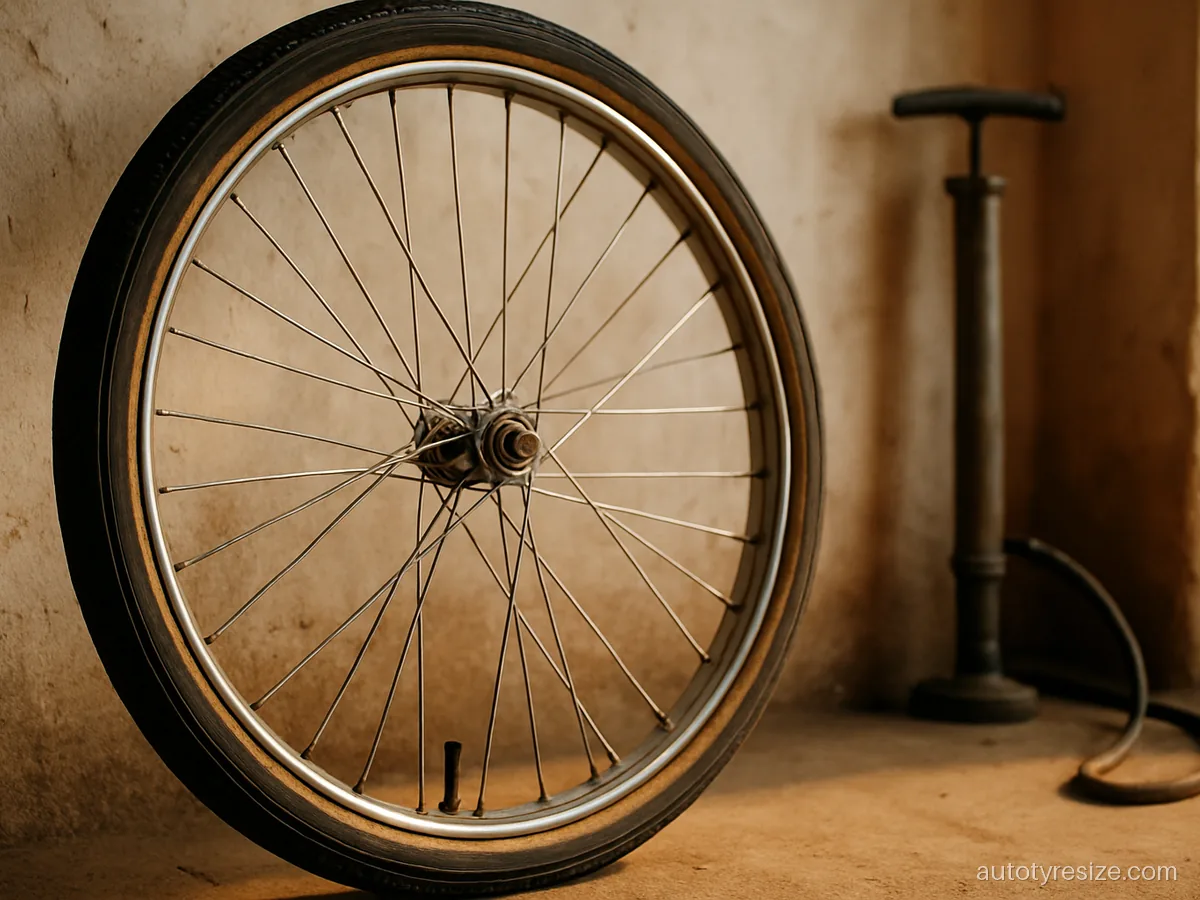
The surest way to get the right cycle tyre size is to read the ISO number on the sidewall, such as 37-622, where 37 gives the width in millimetres and 622 the rim's bead seat diameter. Two tyres with the same ISO diameter fit the same rim, even if one is sold as 700c and the other as 29 inch.
Cycle sizes are confusing because the same inch name can mean two different rims. A 26 inch mountain bike tyre will not fit an older 26 inch city cycle. This guide sorts out the names used in Indian cycle shops and shows how to buy the right tyre and tube the first time. Motorcycle and scooter sizes are on the bike tyre size list.
At a glance
- 700c and 29 inchBoth use a 622 mm bead seat diameter
- 27.5 inch584 mm bead seat diameter
- 26 inch mountain bike559 mm bead seat, written like 26 x 1.95
- 26 x 1 3/8 city cycle590 mm bead seat, does not fit a 559 rim
- 28 x 1 1/2 roadster635 mm bead seat, the classic heavy Indian roadster
- ISO code formatWidth in mm, then bead seat diameter in mm, such as 37-622
Cycle tyre size chart
| Name in the shop | ISO bead seat | Typical use |
|---|---|---|
| 700c, 28 inch hybrid | 622 mm | Road, hybrid and fitness cycles |
| 29 inch | 622 mm | Mountain bikes with large wheels |
| 27.5 inch (650b) | 584 mm | Mountain and gravel bikes |
| 26 inch, decimal width (26 x 1.95) | 559 mm | Mountain bikes and many geared cycles |
| 26 x 1 3/8 | 590 mm | Older city and ladies cycles |
| 28 x 1 1/2 | 635 mm | Heavy roadster cycles |
| 20 inch, decimal width | 406 mm | Kids cycles and folding cycles |
The bead seat diameter is the one number that must match. Width can change within the range your rim and frame allow.
700c tyre size explained
700c is a French style name. The 700 once meant the outer diameter in millimetres, and the c was a width class. Today every 700c tyre fits a 622 mm rim, whatever its width, so a 700 x 28c and a 700 x 38c both go on the same wheel if the frame has room. A tyre marked 28-622 is 28 mm wide; one marked 40-622 is 40 mm wide. Narrow tyres roll easily on smooth roads; wider ones soak up potholes and broken tar much better, which is why many Indian riders on hybrid cycles pick 35 to 40 mm widths.
The two kinds of 26 inch tyre
This is the mistake we see most. Mountain bike tyres are written with a decimal width, like 26 x 1.95 or 26 x 2.10, and fit a 559 mm rim. Older city cycles use a fraction width, like 26 x 1 3/8, and fit a 590 mm rim. The difference is 31 mm, far too much to stretch a tyre over. Always look for the ISO number, or check whether the old tyre's width is written as a decimal or a fraction.
Roadster cycles: 28 x 1 1/2
The heavy black roadster still common in small towns and with milk and newspaper delivery riders uses a 28 x 1 1/2 tyre on a 635 mm rim. It is not the same as a 700c tyre, even though both are sometimes called 28 inch. Roadster tyres are built thick to carry loads on the carrier and survive rough village roads; many come with a heavier tube too. Ask for the roadster size by name and read the ISO code off the worn tyre.
How to measure a cycle tyre with no readable marking
- Take the tyre off and look on the rim: many rims carry their own ISO marking such as 622x19.
- If not, measure across the rim from one bead seat to the opposite one, inside the hooks, passing over the hub. The figure you get is the bead seat diameter.
- Compare with the chart. A result near 559, 584, 590, 622 or 635 tells you the family.
- Measure the internal rim width to pick a tyre width that suits it.
A cycle shop will usually measure the rim for you if you carry the wheel in.
Tubes, valves and pressure
The tube must match the tyre's diameter and cover its width range, which is printed on the tube box. Check the valve type too: the thin Presta valve on many road cycles needs a different pump head from the wider Schrader valve used on car tyres and most Indian city cycles, and the old Dunlop style valve still fitted to many roadsters. Unlike cars, cycle tyres usually print a recommended pressure range on the sidewall, and you fill within that range: lower for comfort on rough roads, higher for a lighter rolling feel. Forecourt air machines can burst a slim cycle tube in a moment, so use a hand pump with a gauge. The pressure converter helps if the range is printed in bar.
When to change a cycle tyre
Replace the tyre when the tread is worn flat and square, when the casing threads show through, when there are cuts you can open with a fingernail, or when the sidewall has cracked from sun. Frequent punctures from tiny glass and wire are often a sign the tread has thinned out. Car and motorcycle markings are decoded in reading a tyre size, and for puncture repairs see the puncture guide.
Questions owners ask
Does 700c equal 28 inch?
A 700c tyre and a 28 inch hybrid tyre both fit a 622 mm rim. The older 28 x 1 1/2 roadster tyre is different and needs a 635 mm rim.
Can I fit a 29 inch tyre on a 700c rim?
Yes, both use the 622 mm bead seat. The question is whether the wider 29 inch tyre clears your frame and brakes.
What does 37-622 mean on a cycle tyre?
It is the ISO size: 37 mm wide and made for a rim with a 622 mm bead seat diameter, which is the 700c and 29 inch rim size.
Do 26 x 1.95 and 26 x 1 3/8 tyres fit the same rim?
No. The decimal size fits a 559 mm rim and the fraction size fits a 590 mm rim. Check the ISO number before buying.
How do I read a cycle tyre size chart?
Find your old tyre's ISO number on the sidewall, match the second number to the chart, then choose a width your rim and frame can take.