
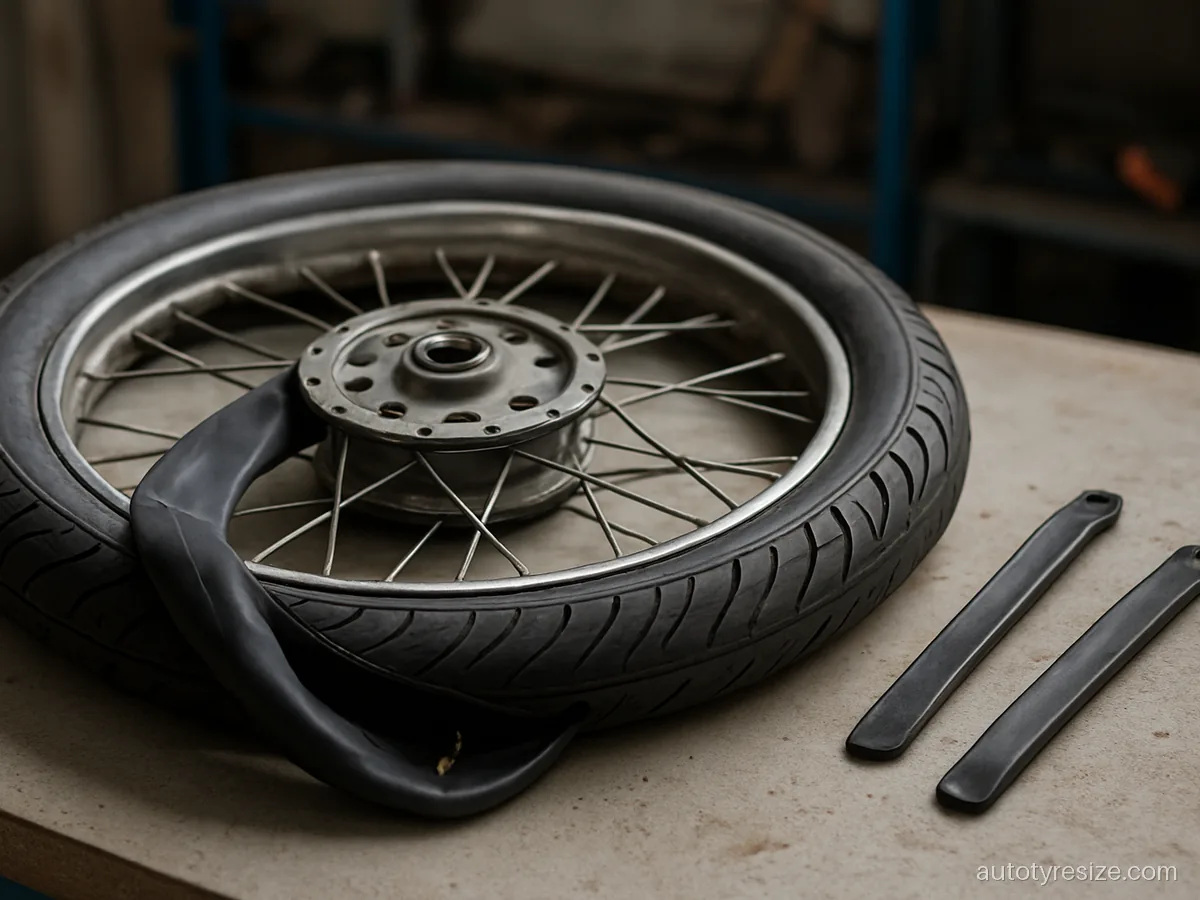
A tyre tube is the soft rubber inner bag that holds the air inside a tube type tyre, and you buy one by matching the tyre's sidewall size and the valve your rim takes. The tyre gives grip and strength; the tube does the sealing.
Tubes are still everywhere on Indian roads: spoke wheel commuter bikes, cycles, many three wheelers, tractors and older cars. They are simple, easy to repair at any roadside shop and quick to replace on a lonely road. This guide explains how to pick one, fit it without damage and know when a patched tube has done its time. For the wider choice, see our tubeless tyre guide.
At a glance
- What it isInner rubber bag with its own valve, inside a tube type tyre
- Still common onSpoke wheel bikes, cycles, many commercial and older vehicles
- How to buyMatch the tyre size on the sidewall, and the valve type
- PunctureAir goes fast; tube is patched or replaced
- Replace whenMany patches, a torn valve base, cracks, or a new tyre
- Tube in tubelessOnly as a get-home fix after a tyre shop checks the tyre
How a tyre tube works
A tube type tyre and its rim do not seal against each other. Air would leak out through the spoke holes and the joint between tyre bead and rim. The tube sits inside, filled with air, and presses the tyre out against the rim. Its valve sticks out through the rim's valve hole.
Between the tube and a spoke rim sits a rubber rim tape, also called a flap. It covers the spoke ends so they cannot rub a hole in the tube. A missing or shifted rim tape is a common cause of repeat punctures on spoke wheel bikes.
Choosing the right bike tyre tube size
The tube size follows the tyre size. Read the sidewall, for example 2.75-18 or 90/90-17, and ask for a tube marked for that size. A tube box or the tube itself usually lists the tyre sizes it fits.
- The rim diameter, the last number, must match exactly. An 18 inch tube does not go in a 17 inch tyre.
- The width can sometimes cover a small range, as the tube stretches. Too small a tube is stretched thin; too big a tube folds and chafes.
- Pick the right valve: straight or bent. Bent valves help on bikes where a disc or hub is in the way.
Our bike tyre size guide decodes each part of the sidewall marking. Some bikes run a different tube size front and rear.
Cycle tyre tube sizes and valves
Cycle tyres use two sizing styles. Older Indian roadsters use inch sizes written with a fraction. Sport and kids cycles often use decimal inch sizes or millimetre sizes. The cycle tyre tube must match the style and the numbers, since an inch size and a millimetre size that look close can be quite different.
Valve type matters too. Everyday cycles often use a sleeve type valve, sport cycles a thin lock nut valve, and some cycles a car type valve. The rim hole is drilled for one size. Read the old tube before buying a new one. Our cycle tyre size guide covers both sizing styles.
Fitting a tyre tube without pinching it
- Put a little air in the new tube so it holds its round shape.
- Check inside the tyre with a cloth for any thorn, glass or wire. Do not use bare fingers.
- Make sure no spoke end peeks past the rim tape.
- Push the valve through the rim hole, then tuck the tube into the tyre all round.
- Lever the bead over the rim starting opposite the valve. Finish at the valve, pushing the valve up into the tyre so the tube is not trapped.
- Fill slowly while checking the bead line sits evenly on both sides.
- Bring it up to the bike maker's cold figure, then snug the valve nut by hand.
Most new tube punctures in the first week are pinch cuts from a tyre lever. Use smooth levers and little force.
Patch or replace the tube
A roadside puncture shop will patch a tube in minutes. Patching is fine for a clean nail hole. Replace the tube when:
- The hole is at or near the valve base. Patches do not hold there.
- There is a long tear or a split from riding flat.
- The tube already has many patches.
- The rubber is cracked, sticky or has gone thin.
- You are fitting a new tyre. A new tube with a new tyre is the norm.
A tube that has been run flat for a distance is usually chewed inside, however tiny the visible hole. Our puncture repair guide covers both patch and plug methods.
Can we put tube in tubeless tyre
Owners ask this after a tubeless tyre gets a cut too big for a plug. Tyre shops do fit a tube in a tubeless tyre as a temporary way home. It works on many tyres, but it is a compromise:
- The tube can rub inside the tyre and heat up on long, fast runs.
- If the tube punctures, air leaves suddenly, unlike a slow tubeless leak.
- The cut in the tyre that caused the problem is still there.
Never fit a tube to hide damage. If the tyre has a sidewall cut, a bulge or exposed cords, it must be replaced. Let a tyre technician judge it, and follow the tyre maker's advice before using a tube long term.
Which tyre is best for bike wheels, tube or tubeless type
For alloy wheel bikes and scooters, tubeless is the better choice for most riders, because a nail usually means a slow leak instead of a sudden flat. For spoke wheel bikes, the rim is not airtight, so tubes are the normal choice unless the maker built that rim to be airtight. Our full comparison is in tubeless tyre vs tube tyre.
Size alone does not decide it. A 120/80-18 rear tyre on a spoke wheel runs a tube; the same size on a tubeless ready alloy can run without one. If your wheel needs a tube, ask for one marked for 120/80-18, not a near size.
Looking after tubes for long life
- Keep pressure correct. A soft tyre lets the tube shift and its valve tilt, which tears the valve base.
- Check the valve stands straight. A tilted valve means the tube has crept round inside the tyre, usually from low pressure or hard braking.
- Store spare tubes in a bag, away from sun and oil.
- Carry a spare tube on long rides if your bike runs tubes. Swapping it is faster than finding a shop in the ghats at night.
A weekly gauge check catches a slow leak early. Your model's figures sit in our list of bike tyre pressures.
Questions owners ask
How do I know which tyre tube size to buy?
Read the size on the tyre sidewall and buy a tube marked for that size. The rim diameter must match exactly. Also match the valve type and whether it is straight or bent.
Can I use the old tube with a new tyre?
It is better not to. An old tube has stretched to the old tyre and may have patches or thin spots. A new tube costs little compared with a breakdown.
Why does my tube keep puncturing in the same spot?
Look for a thorn or wire still stuck in the tyre, a sharp spoke end, or a missing rim tape. A tyre shop can find it quickly by matching the hole with the tyre.
Is a bike tyre tube better than tubeless?
Tubes are easier to repair at any roadside shop and suit spoke wheels. Tubeless tyres lose air slowly after a nail and suit alloy wheels. On alloy wheels made for tubeless tyres, most riders prefer tubeless.
Why does the valve on my tube lean to one side?
The tube has slipped inside the tyre, often from low pressure or hard braking. Let the air out, push the valve straight, and refill to the correct pressure. If it keeps happening, check the pressure more often.
How many patches can a tube have?
Nobody can give a safe count; every patch weakens the rubber a little. If the tube has several patches or a patch near the valve, replace it.