
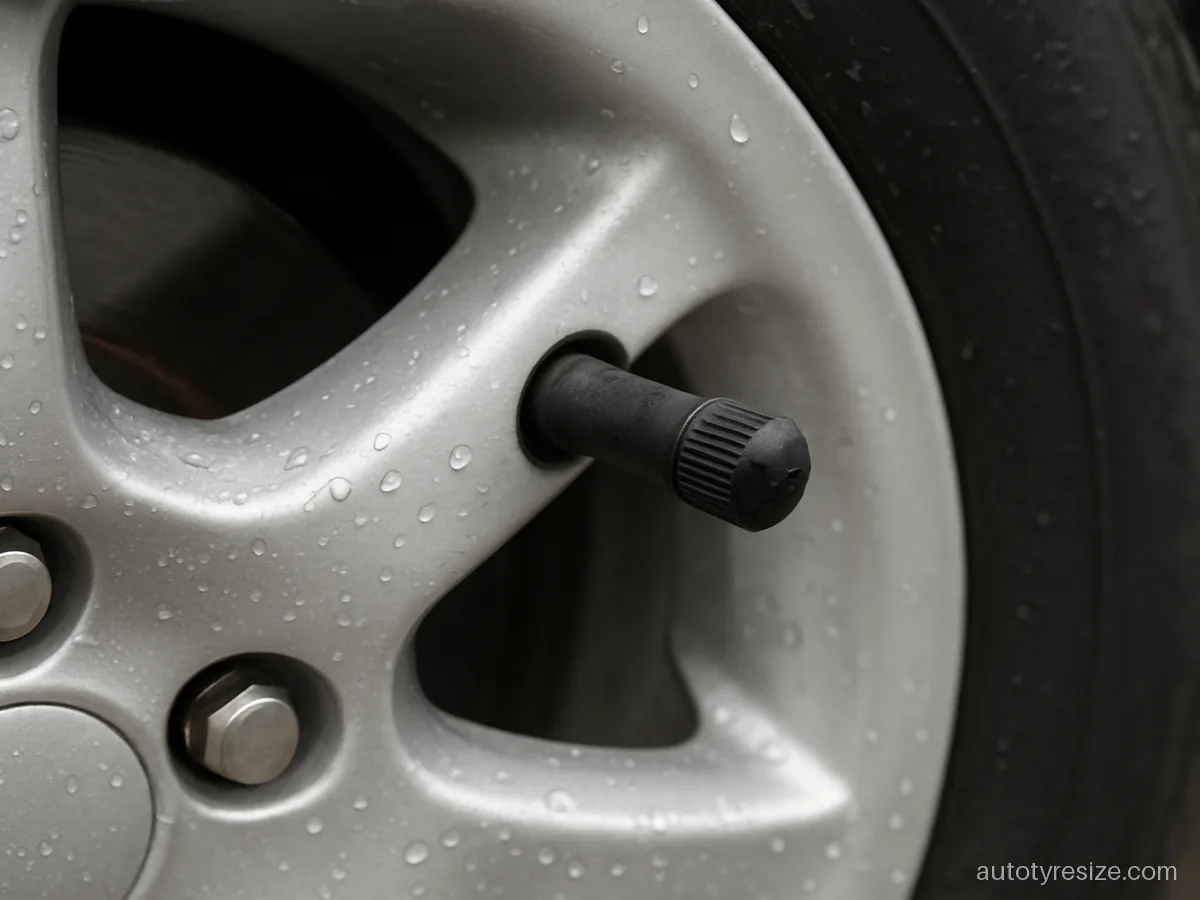
A tyre valve is the small stem on the wheel where you push in the air hose, and it holds the air in with a tiny spring loaded core and a screw-on cap. It is the cheapest part of the wheel, yet a worn one can leave a perfectly good tyre flat every morning.
Tyre shops see many slow leaks that turn out to be the valve, not a nail. This guide explains the types fitted to Indian cars, bikes, scooters and cycles, what each cap does, and how to test and replace a valve. For how tubeless tyres seal on the rim, see our tubeless tyre guide.
At a glance
- PartsRubber or metal stem, spring loaded core, and a dust cap
- Tubeless carsSnap-in rubber valve fitted in the rim hole
- Tube tyresValve is part of the tube and comes out through the rim
- Snap-in ratingCommon rubber snap-in stems are rated around 65 psi
- Cycle valvesWoods (sleeve type), Presta (thin) and car type
- Cap jobKeeps out dust and water; a backup seal, not the main one
Parts of a tyre valve
- Stem: the body. On tubeless wheels it is usually rubber over a metal tube. Some are all metal.
- Core: a tiny spring valve screwed inside the stem. Pressing its pin lets air in or out. The core is what actually seals.
- Cap: screws on top. It keeps dust, mud and water off the core, and gives a little backup seal.
The core can be unscrewed with a small valve tool and replaced on its own. That is often the quickest fix for a leak at the valve. Many pump kits and tyre shops carry a tyre valve removal tool, which also helps when deflating a tyre fully for a repair.
Tubeless tyre valve on cars and bikes
On a tubeless wheel the valve is fitted straight into a hole in the rim. The most common type is the snap-in rubber stem. It is pulled through the hole from inside and the rubber collar seals against the rim. Common snap-in stems are rated for around 65 psi, with some makers stating a little less, which suits normal car and two wheeler pressures.
Rubber hardens and cracks with heat and age. That is why a good tyre shop fits a new tubeless tyre valve whenever a new tyre goes on. Some wheels use a metal clamp-in valve held by a nut, and on cars with direct pressure sensors the sensor may be part of the valve, which needs more care when changing tyres. Our tyre pressure monitoring guide explains those sensors.
Tube tyre valves and bike tyre valve types
On a tube tyre, the valve is part of the tube. It pokes out through the rim hole and is held by a small nut. If that valve tears at its base, the whole tube usually has to be replaced, as patches do not hold there. See our tyre tube guide for picking the right tube.
Bike tyre valve types in India are mostly the same car style valve, either a straight snap-in stem on alloy wheels with tubeless tyres or a tube valve on spoke wheels. Some bikes with large discs use an angled valve so the pump head clears the brake. The tyre pressure valve for bike tyres takes the same pump head as a car, so a petrol pump hose fits.
Cycle tyre valve types
Cycles are different. Three types are common:
| Type | Looks like | Where you see it |
|---|---|---|
| Woods (sleeve) valve | Wide base, rubber or plastic sleeve core | Most everyday Indian cycles |
| Presta | Thin stem with a small lock nut on top | Road and sport cycles |
| Car type | Same as a car valve | Mountain and kids cycles |
The sleeve type valve on a cycle tyre valve tube can be pumped with a pump that fits a Presta head. A car type cycle valve fills at any petrol pump, though a petrol pump hose can push a thin cycle tube past its limit in seconds. Our cycle tyre pressure guide gives the safe range to aim for.
Tyre valve caps: plastic, metal and indicator caps
Never leave a valve without a cap, and a tubeless tyre valve cap matters as much as one on a tube tyre. Tyre pressure valve caps come in a few kinds. Mud and water on the core make it stick, and a stuck core leaks slowly.
- Plastic caps with a rubber seal: cheap, light and they do not seize. The best everyday choice.
- Tyre valve caps metal: look smart, but some metals react with the valve and seize on after a monsoon. Put a dab of the right grease or check them every few months.
- Luminous or fluorescent tyre valve caps: glow at night. Fine for looks; they do the same job as a plain cap.
- Air alert tyre valve cap: a pressure indicator cap that shows a colour change when pressure drops. Each is made for one pressure, so it must match your tyre's figure, and it is not a substitute for a real gauge.
Heavy decorative caps on a fast spinning wheel can upset balance and stress a rubber stem. Keep caps light.
How to check a tyre valve for leaks
- Fill the tyre to its normal cold pressure.
- Remove the cap.
- Put a little soapy water on the top of the stem with your finger or a brush.
- Watch for small bubbles growing. Bubbles at the top mean a leaking core.
- Bend the rubber stem gently to one side and wet its base. Bubbles there mean a cracked stem or a poor seal in the rim.
A leaking core can be tightened a little or replaced. A cracked stem means the tyre must come off the rim, or at least be broken down at the valve, for a new stem. If the tyre keeps losing air and the valve is fine, look for a nail with our tyre puncture guide.
Tyre valve stem damage and when to replace
Replace the tyre valve stem when you see:
- Fine cracks in the rubber when you bend it.
- A stem that leans or wobbles in the rim hole.
- Damage from a kerb or a careless jack.
- A new tyre being fitted. A fresh valve is a small extra job at that time.
A valve that suddenly fails at speed lets the tyre deflate fast. If a tyre drops quickly, slow down gently, do not brake hard, and stop safely. Have the valve and the tyre checked by a tyre shop before driving on.
Does a tyre valve affect pressure readings
A sticky or dirty core can make a gauge read low because air escapes while you press it on. Push the gauge on firmly and straight. If you get a different reading every time, clean the valve top or replace the core. Gauge technique is covered in checking tyre pressure, and remember to check pressure with the tyres cold.
Questions owners ask
Is it okay to drive without a tyre valve cap?
For a short while, yes, because the core does the sealing. But dirt and water can make the core stick and leak. Fit a plain cap with a rubber seal as soon as you can.
Should the valve be changed when I buy new tyres?
Yes, on tubeless wheels it is good practice. The old rubber stem has aged with the old tyre, and a new valve costs far less than a slow leak on a new tyre.
Can a tubeless tyre valve be repaired?
A leaking core can be replaced from outside. A cracked or torn stem cannot be patched; it is replaced, which means breaking the tyre bead at the valve.
What is the difference between bike and cycle valves?
Motorcycle and scooter valves are the same as car valves. Many Indian cycles use a sleeve type valve, and sport cycles use a thin Presta valve, so you need a pump head or adapter that fits.
Are metal valve caps good?
They look good but can seize onto the valve after rain and monsoon grime. Plain plastic caps with a rubber seal are more practical. If you use metal caps, check that they unscrew easily every few months.
What makes air leak out at the valve?
Usually a loose or dirty core, a cracked rubber stem or a stem not sealing in the rim hole. A soapy water test shows which. A tyre shop can fix all three quickly.