
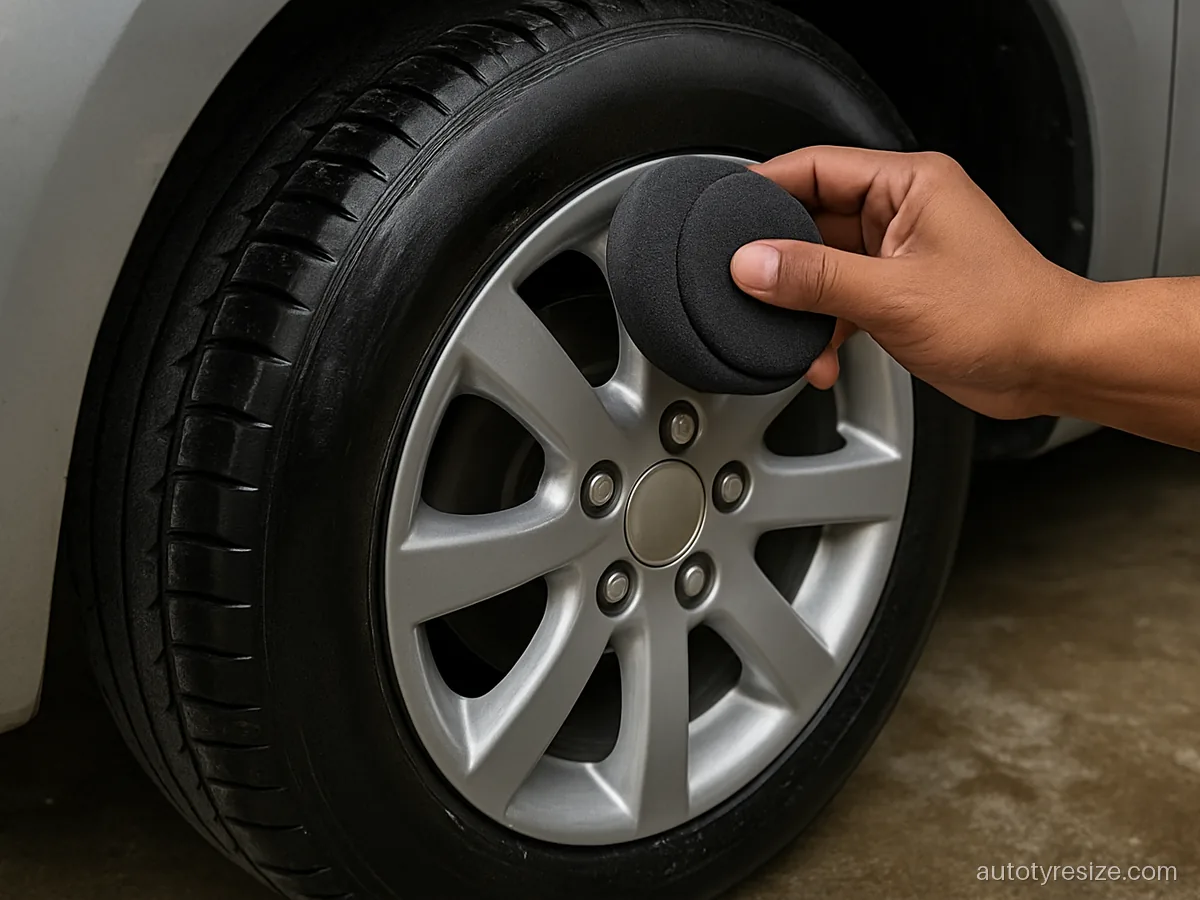
Tyre polish is a dressing you put on the tyre sidewall to make the rubber look deep black again, and it should never go on the tread, the brakes or the edges of a two wheeler tyre. Used right, it makes a washed car look finished. Used carelessly, it makes the tyre slippery where grip matters.
At a busy service centre, tyre polish is the last step after a wash. Owners often ask which kind is better and whether it harms the tyre. This guide explains the types, the finish each gives, how to apply it neatly and the safety points. Sizes, pressures and other care guides start from our home page.
At a glance
- Where to applySidewall only, never the tread or a bike tyre's edges
- Water basedSatin finish, less sling, gentler on rubber
- Solvent basedHigh gloss, lasts longer, can sling onto paint
- FormsSpray, liquid with applicator, gel; bulk cans for washing centres
- Before applyingWash and dry the tyre fully
- SafetyKeep off brake discs, pedals and footrests
What tyre polish does and does not do
Sun, heat, road dust and washing soaps fade a tyre from deep black to brownish grey. A dressing puts a thin coat of oils or silicone on the rubber that darkens it and adds shine. Some products also claim UV protection.
What it does not do: it does not make an old tyre safe, it does not hide or repair cracks, and it does not change grip. Fine cracks on the sidewall are a sign of ageing. A shiny coat over them can make them harder to spot. If you see cracks, bulges or cuts, let a tyre technician check it first; looks can wait. Our tyre sidewall damage guide explains what to watch for.
Water based vs solvent based tyre polish liquid
| Point | Water based | Solvent based |
|---|---|---|
| Finish | Satin to medium shine | Wet look, high gloss |
| Lasts | Shorter, washes off in rain | Longer |
| Sling onto paint | Less | More, if not wiped |
| Effect on rubber | Generally gentler | Some solvents can dry rubber over time |
| Smell | Mild | Strong |
For daily use cars, a water based tyre polish liquid applied with a sponge gives a clean satin look that does not attract as much dust. For a show finish before a wedding drive or a car display, a solvent based gloss gives more shine, but wipe off the excess so it does not fly onto the paint.
Tyre polish spray, liquid or gel
- Tyre polish spray: quickest. The mist also lands on alloys, brake discs and the floor, so spray onto an applicator pad instead of directly on the tyre, or cover the wheel face.
- Liquid with applicator: most control, least waste. Pour a little on a foam pad and wipe along the sidewall.
- Gel or cream: thick, stays where you put it, good for a long lasting coat.
Wash centres and detailers buy a tyre polish 5 litre can and refill small sprayers. Some bulk liquids are concentrated and must be diluted as the label says. A wrong mix leaves a greasy, dust catching film.
How to apply tyre polish neatly
- Wash the tyre with a brush and water to remove old dressing and road film. Brown residue on the brush is normal.
- Let the tyre dry fully. Polish on a wet tyre streaks and runs.
- Put a small amount on a foam applicator, not straight on the tyre.
- Wipe it over the sidewall in one direction. Stay off the tread face.
- Leave it for a few minutes to soak in.
- Wipe the excess with a dry cloth. This step stops sling and dust.
- Check the alloy and brake disc are clean before driving.
Two thin coats look better and last longer than one thick coat.
Tyre polish on bikes and scooters
Two wheelers lean. In a turn, the tyre rides on its edges, not just the centre. Polish on the tread shoulder or the edge of a bike tyre can make it slip in a corner. On a two wheeler:
- Apply only to the lower sidewall near the rim.
- Use a cloth applicator, never a spray.
- Keep it well away from the brake disc and brake drum.
- Do not let it reach the footrests, pegs or kick lever.
If polish gets on a brake disc, the brakes will be weak. Clean the disc with a brake cleaner and test the brakes at walking speed before riding. If braking stays weak, have a mechanic inspect the pads.
Tyre polish and grip on the tread
The tread is designed to touch the road clean. Silicone or oil on it reduces grip until it wears off, which can take a while on a car that runs mostly in town. Wet roads and polish together make a slippery mix. If some polish has run onto the tread, wipe it off with a degreaser or soapy water. Then drive gently for the first few kilometres. Keeping the tread clean also lets you read wear easily. See our tyre tread guide for what the tread should look like.
Does tyre polish damage tyres
A good quality dressing used on the sidewall does not harm a tyre. Problems come from strong solvent products used often, from thick layers that trap dust, and from heavy shine that hides real damage. Tyres age from sun and heat regardless of polish. Check the manufacturing date code on the sidewall when judging an old tyre, using our tyre manufacturing date guide, and keep pressure correct, since underinflation flexes the sidewall and speeds up cracking.
Simple routine for clean looking tyres
- Weekly: rinse tyres with the car, brush off mud after monsoon drives.
- Monthly: scrub the sidewall and apply a thin water based coat.
- Every wash: check for nails and cuts while you are down at the wheel.
- Every two weeks: check cold pressure with a gauge, as explained in our tyre pressure guide.
Parking in shade and keeping the tyres away from oil spills does more for the rubber than any shine product.
Questions owners ask
Is tyre polish safe for tyres?
Yes, a good dressing on the sidewall is safe. Avoid getting it on the tread or brakes, and do not use it to hide cracks. Strong solvent products used very often may dry the rubber over time.
Should I use tyre polish spray or liquid?
A liquid on an applicator gives more control and keeps it off the wheels and brakes. A spray is faster but creates overspray. If you spray, spray onto a pad first.
Why does tyre polish turn brown?
Old dressing mixes with dust and with the protective waxes that come out of the rubber. Scrub the sidewall clean before applying a fresh coat.
Can I put tyre polish on bike tyres?
Only on the lower sidewall, with a cloth. Never on the tread or the edges where the tyre touches the road when leaning. Keep it far from the brake disc.
How long does tyre polish last?
Water based polish lasts until the next heavy rain or wash. Solvent based gloss lasts longer. Thin coats wiped well last better than thick ones.
What is a tyre polish 5 litre can for?
Bulk cans are mainly for car wash centres and detailers who polish many cars a day. Some are concentrates that need diluting as the label says.