
The Swift Dzire tyre pressure for petrol and CNG cars is 29 psi, cold, and that one number goes in all four tyres. It holds for the 14 inch LXi and VXi rubber as well as the 15 inch ZXi tyres.
Published lists do not all agree. Some show 33 psi all round, and some tyre makers quote 36 psi front with 33 psi rear, which matches the earlier diesel car. Your sedan's own label, stuck where the driver door shuts, and its owner's manual have the final say; note the figure in your phone.
Dzire fitment card
- Tyre size
- 165/80 R14 (LXi, VXi), 185/65 R15 (ZXi, ZXi Plus)
- Wheels
- 14 inch steel on LXi and VXi, 15 inch alloy on ZXi and ZXi Plus
- Tyre pressure (cold)
- Front 29 psi, rear 29 psi at normal load (petrol and CNG)
- Spare
- Steel spare wheel
- Wheel cover
- 14 inch full wheel covers on VXi steel wheels
- Fog lamps
- LED front fog lamps on ZXi Plus
- Earlier version diesel
- Same sizes; LDi, VDi 165/80 R14, ZDi, ZDi Plus 185/65 R15
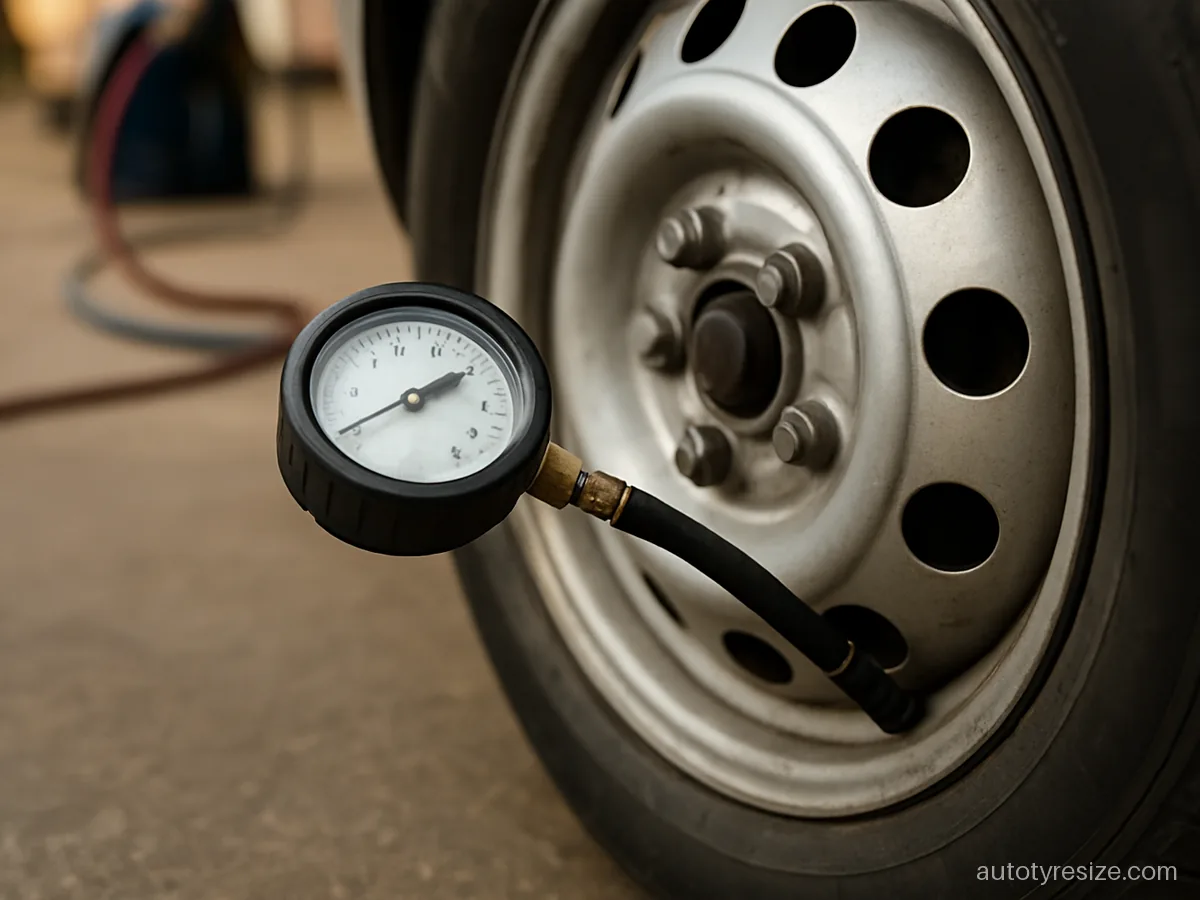
Swift Dzire tyre pressure front and back, in psi
| Version | Front | Rear |
|---|---|---|
| Current petrol and CNG, 165/80 R14 | 29 psi | 29 psi |
| Current petrol and CNG, 185/65 R15 | 29 psi | 29 psi |
| Earlier version diesel (LDi, VDi) | 36 psi | 33 psi |
| Full load | See the door sticker | |
Treat a Dzire as cold after it has been parked about three hours, or driven no more than a kilometre or two. Warm tyres read high, so letting air out to reach 29 psi after a highway stint leaves them underfilled later.
Why the door sticker beats any list
Maruti Suzuki prints the cold figures on a label on the driver door pillar. Open the door and look at the edge of the body, near the lower hinge. The label gives front and rear values, and sometimes a higher pair for a fully loaded car. If your sticker shows something other than 29 psi, follow the sticker.
Ignore the psi moulded into the rubber near the rim. It marks the most that tyre can safely hold, not the Dzire's setting, and pumping to it makes the Dzire hop over expansion joints and slide sooner on wet tar.
Air for a full boot and five on board
A sedan gets loaded more than a hatch. Wedding trips, airport drops and suitcases stacked to the parcel shelf squat the rear down. We have not confirmed a published full-load figure, so read it from the door sticker if one is shown. If it is not, ask your service centre before a long trip rather than guessing. Never go above the sidewall maximum.
CNG cars carry the cylinder in the boot, so the rear tyres work a little harder all the time. Check them more often, weekly if the car runs as a cab.
Pump units: psi, bar or kPa
Most Indian petrol pump machines show psi, but some digital ones read in bar or kPa. Dzire owners using a bar display should set about 2.0 (200 kPa) for 29 psi; the 33 psi figure some lists quote is close to 2.3 bar. For other readings, our tyre pressure converter does the maths. Forecourt machines often drift 2 psi or more, and a dial gauge stored in the Dzire's glovebox removes the doubt. The method is laid out in checking tyre pressure.
- Park on level ground before driving far.
- Unscrew the valve cap and press the chuck on straight.
- Fill to the cold figure, then recheck.
- Do the spare once a month too.
Soft or hard: how wrong air shows on a Dzire
Under-inflated Dzire tyres wear both shoulders, make the steering heavy at parking speed and waste fuel on long runs. They also heat up on expressways, which is how most highway blowouts start. Overfilled ones scrub a stripe down the middle, crash through potholes and let go earlier on wet roads.
Monsoon and ghat road habits
During the monsoon, proper pressure holds the tread grooves open and lets them pump water away. Do not drop pressure for a softer ride in the wet; it makes aquaplaning more likely. On ghat descents the tyres and brakes heat up, so check pressure the next morning, not at a stop halfway down.
Questions owners ask
What is the Swift Dzire tyre air pressure?
Fill 29 psi cold in every tyre on a petrol or CNG Dzire. The label on your own door frame is final.
Is the Dzire tyre pressure different front and back?
On the current petrol and CNG car the front and back figures are the same, 29 psi. The earlier diesel car used 36 psi front and 33 psi rear because of the heavier engine.
Does the 15 inch ZXi need a different pressure from the 14 inch VXi?
Nearly every listing shows one 29 psi value whatever the rim size. Your door sticker settles it if it shows separate values.
Should I fill 33 psi in my Dzire?
Some lists show 33 psi, and a few owners run it on highway trips. Stay with the door sticker figure for daily use and never exceed the maximum moulded on the sidewall.
How often should I check Dzire tyre pressure?
Twice a month for a private car and every week for a cab or CNG car. Check before any long trip and do the spare as well.