
Nitrogen air in tyres escapes through the rubber at a slightly slower rate than ordinary air, yet the gain is small because the air you breathe is already about 78 percent nitrogen. What keeps your tyres safe and economical is filling the right cold pressure and checking it often, whichever gas is inside.
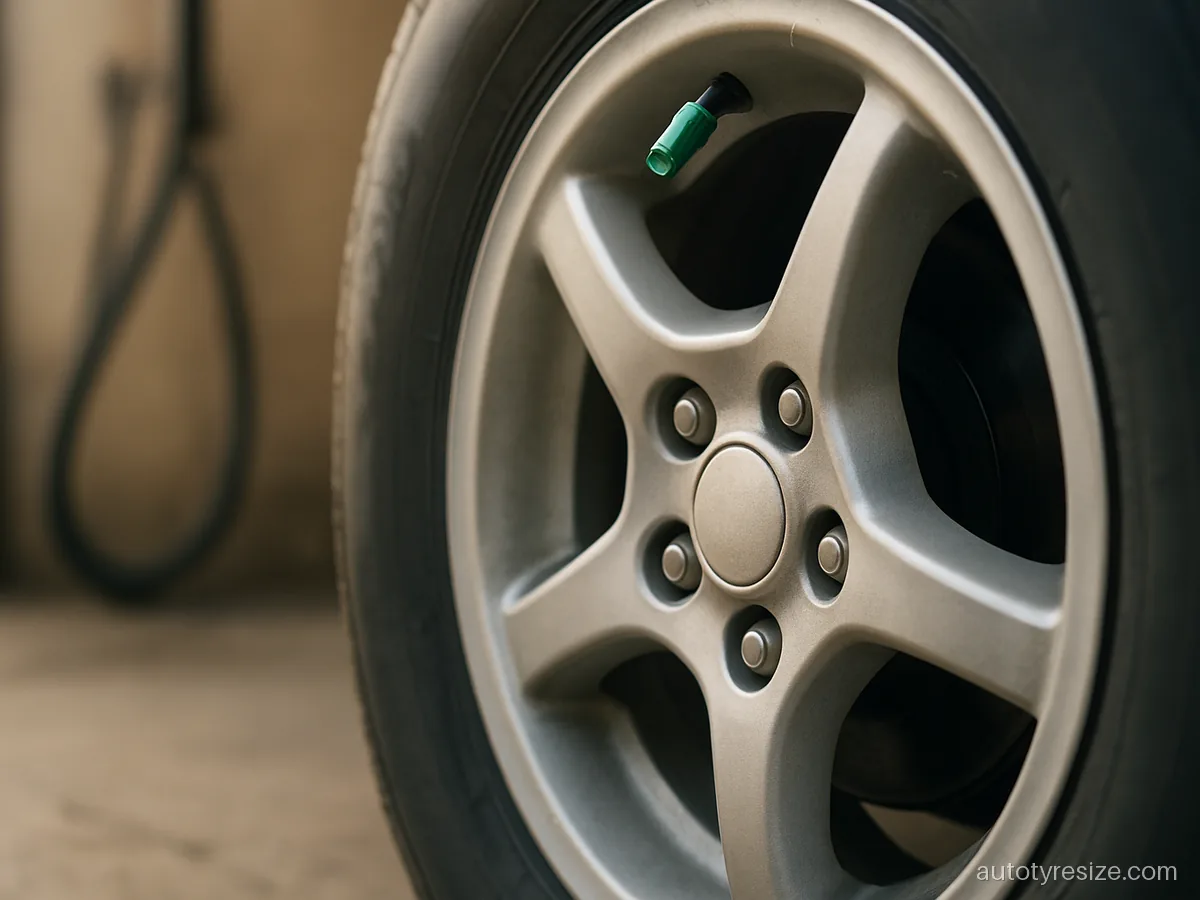
Many petrol pumps and tyre shops in India offer nitrogen as a paid fill, usually from a green capped valve. Owners ask whether it is worth it, whether they can top up with normal air, and whether the pressure figure changes. This page answers each with what testing has shown. For the full picture on pressure, see our tyre pressure guide.
At a glance
- Normal airAlready about 78 percent nitrogen
- Tyre shop nitrogenTypically around 93 to 95 percent pure
- Pressure loss testOver a year from 30 psi: air lost 3.5 psi, nitrogen 2.2 psi on average
- Pressure to fillSame door sticker figure as with air
- MixingSafe; topping up nitrogen with air only dilutes the benefit
- Fuel savingComes from correct pressure, not from the gas itself
Difference between nitrogen and air in tyres
Normal air is roughly 78 percent nitrogen, about 21 percent oxygen and a small share of other gases, plus some water vapour. Nitrogen from a tyre shop machine is not 100 percent pure either. It is typically around 93 to 95 percent nitrogen, made by filtering oxygen out of ordinary air.
So the real difference is a few percent less oxygen and less moisture inside the tyre. Oxygen is said to seep through tyre rubber slightly faster than nitrogen, and moisture changes pressure more as the tyre heats up. That is where the claimed benefits come from.
What testing shows about nitrogen vs air in tyres
A year long test by a well known consumer testing body filled pairs of tyres, one with air and one with nitrogen, all starting at 30 psi. Over the year, the air filled tyres lost an average of 3.5 psi and the nitrogen filled tyres lost 2.2 psi. That is a difference of about 1.3 psi over twelve months.
The same test found that both kinds lost pressure, which means both still need checking. The tyres in that test stood still rather than running on roads, so real driving might show a somewhat different gap. Research by a road safety agency also found that nitrogen by itself had little or no direct effect on the rolling resistance of the tyre. Rolling resistance follows pressure, not the gas.
Benefits of nitrogen air in tyres of cars, realistically
- Slower pressure loss: real but small. Helpful if you rarely check pressure, though checking is still needed.
- Steadier pressure as tyres heat: less moisture means less pressure swing on a long, hot highway run.
- Less oxygen inside: may slow ageing of the inner liner, though tyres usually wear out or age from outside first.
- Fuel economy: only through holding pressure better. Ordinary air held at the specified figure gives the same result.
For a daily city car checked every two weeks with a gauge, the difference is hard to notice. For a car that does long highway trips and is rarely checked, nitrogen can help a little. It is not a reason to skip pressure checks.
Can we mix nitrogen and normal air in tyres
Yes. There is no chemical reaction and no safety problem. Air is mostly nitrogen anyway. Topping up a nitrogen filled tyre with normal air just lowers the nitrogen share, so you lose a part of the slow leak benefit.
Owners sometimes drive on a soft tyre for days looking for a nitrogen station. That is the wrong choice. Can we fill normal air in nitrogen filled tyres when the reading is low? Always yes. Driving on underinflated tyres heats the sidewall, wears the edges and can lead to a blowout. If you want the nitrogen back, a shop can purge the tyre and refill it later.
Nitrogen tyre pressure chart: does the figure change
No. The cold figure your car maker prints on the door frame label is meant for the tyre, whatever gas is inside it. There is no separate nitrogen tyre pressure chart from car makers. Use the identical psi for front and rear that you would with air, and use the heavier-load number when every seat and the boot are full.
Where the label shows bar or kPa instead, convert with our tyre pressure converter. For a car by car list, see car tyre pressure, and for two wheelers, bike tyre pressure.
Nitrogen vs normal air in tyres in India: is it worth it
Indian conditions make the gas question less important than the habit question. Summer heat, hot tar and long highway runs raise tyre pressure while driving, and potholes damage tyres that are low. Both gases react to heat; nitrogen with less moisture swings slightly less.
| Situation | Our advice |
|---|---|
| City car, checked often | Normal air is fine |
| Highway car, checked rarely | Nitrogen can help a little; still check monthly |
| Two wheeler | Normal air, checked weekly |
| Nitrogen station far away | Top up with air, do not run soft |
If nitrogen is free with a tyre purchase, take it. If you pay for it, weigh it against buying a good pressure gauge, which helps every week.
Nitrogen tyre inflator and portable options
A nitrogen tyre inflator at a tyre shop is a generator that filters oxygen out of compressed air. Large shops use a purge cycle: they let the tyre down and refill it several times to raise the nitrogen share.
A portable nitrogen tyre inflator that you plug into your car does not make nitrogen. It pumps the ordinary air around you, whatever the box says. For home top-ups, any good portable tyre inflator with a digital gauge is the practical tool.
Checking nitrogen filled tyres
Use the same gauge and method as for air. Take readings while the tyres are cold and use a gauge you trust; our pressure check steps page shows the routine. Green valve caps only show that the tyre was filled with nitrogen at some point; they do not tell you the pressure.
If one tyre keeps losing pressure faster than the others, nitrogen or air, suspect a hidden puncture or a faulty valve core. Ask a tyre technician to find the leak rather than refilling it every few days.
Questions owners ask
Is nitrogen better than normal air in tyres?
Slightly. It leaks out a bit slower and swings a little less with heat. In one year long test, nitrogen tyres lost 2.2 psi against 3.5 psi for air. Holding the right psi counts for much more than the choice of gas.
Can I fill normal air in nitrogen filled tyres?
Yes. It is safe. It only dilutes the nitrogen. Never drive on a low tyre while looking for a nitrogen station.
Is nitrogen tyre pressure different from air pressure?
No. Car makers give one cold figure per tyre, and it applies to nitrogen and air alike.
Does nitrogen improve mileage?
Only indirectly. Fuel use depends on tyre pressure. If nitrogen helps you keep the right pressure longer, mileage stays where it should be. Air at the right pressure gives the same result.
Should two wheeler tyres get nitrogen?
There is little benefit. Two wheeler tyres are small and easy to check weekly with normal air. Weekly checks protect the tyre better than any gas.
What do green valve caps mean?
They show that the tyre was filled with nitrogen. They do not show the pressure or the current nitrogen share. Check the pressure with a gauge.