
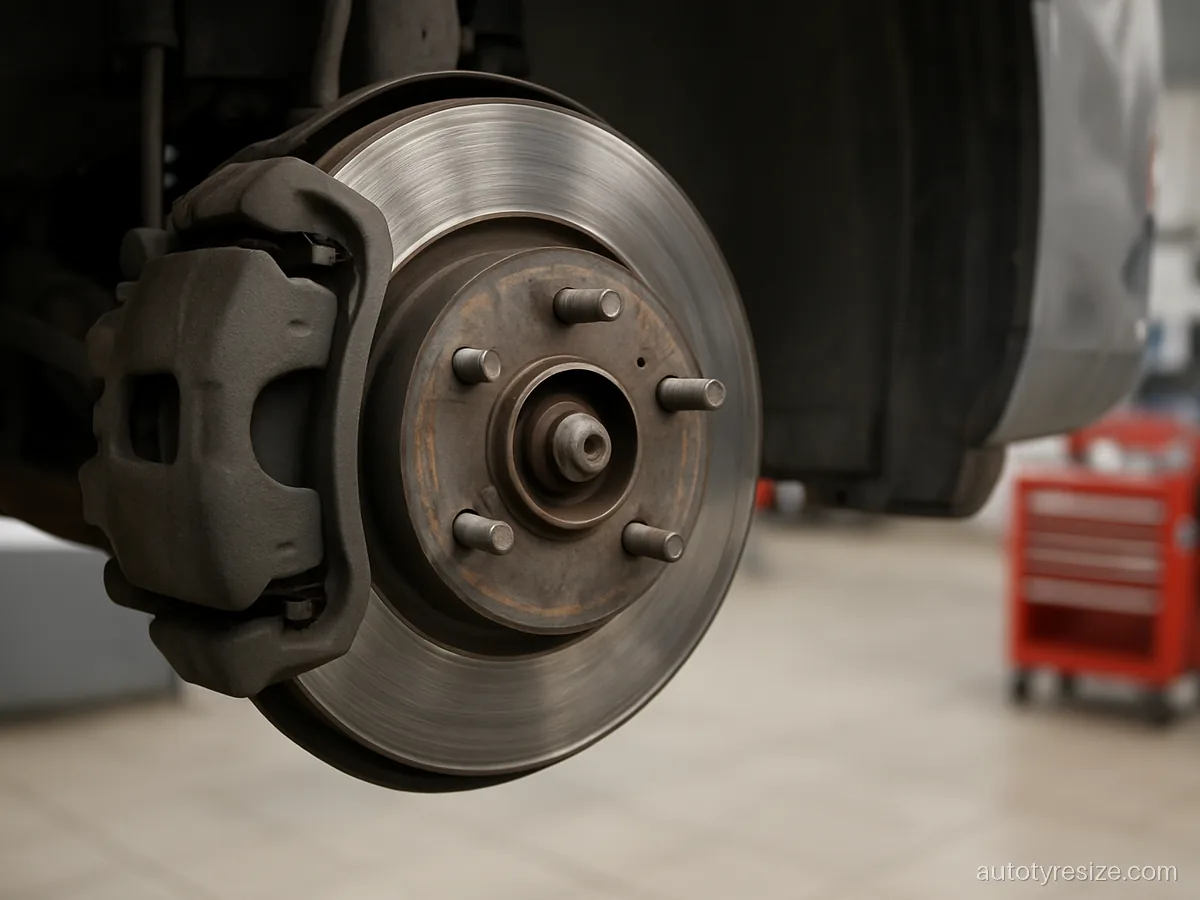
A brake pad should be replaced when about 3 mm of friction material is left, and the right pad is the one whose part number matches your exact model and variant. Front pads wear first on almost every car and bike, because the front brake does most of the stopping.
This page explains how disc pads and calipers work, how to tell front and rear pads apart, how to check wear at home, and what to ask for at a parts shop. Model pages below give the pad details for popular Indian vehicles.
At a glance
- Replace whenAbout 3 mm of friction material left, or the wear groove is gone
- New car pad thicknessAround 10 to 12 mm of friction material
- Wears firstFront pads, because weight shifts forward under braking
- Rear drum brakesUse brake shoes, not pads
- Change inAxle sets: both sides together
- Match byPart number in the manual or the old pad, side by side
Brake pad by model: six vehicle pages
Choose the bike, scooter or car you own. Each page lists the pad type for that model, where it sits, and the signs that tell you a change is due. If your model is not here yet, the checks further down this page work on any car, bike or scooter.
| Page | What it covers |
|---|---|
| Brake pad replacement | Step by step pad change, bedding in, and when a shop job is the safer call |
| Hunter 350 brake pad | Pad type by variant for this roadster and how to spot wear |
| Bullet 350 brake pad | Pad shape and fitment for the Bullet, plus what changed between versions |
| Baleno brake pad | Front disc pads for this hatchback and the rear brake layout |
| Ntorq 125 brake pad | Which variants use a disc and which use a drum, and the part each needs |
| MT-15 brake pad | Front and rear pads on this naked street bike and how to check them |
How a disc brake pad works with the caliper
A disc brake has three main parts. The disc (rotor) turns with the wheel. The caliper sits over the disc like a clamp. Inside the caliper are two pads, one on each face of the disc. When you press the pedal or squeeze the lever, brake fluid pushes a piston, the piston pushes the pads, and friction slows the disc.
Each pad is a steel backing plate with a block of friction material bonded or riveted to it. Only that block wears. When it gets thin, the steel plate comes closer to the disc, and once metal touches metal the disc gets scored and braking falls off fast.
- Brake pad caliper fit: pads are shaped to one caliper. Two pads can look alike and still differ by a few millimetres or in the clip position.
- Sliding pins: most car calipers float on two greased pins. A seized pin wears one pad much faster than the other.
- Anti squeal shims: thin metal plates on the back of some pads cut noise. Refit them when you change pads.
Front brake pad vs rear brake pad
On most cars the front brakes do the bulk of the stopping, because weight shifts forward when you brake. That is why the front brake pad wears out first and why lots of small hatchbacks and compact sedans run discs in front and drums at the back. A drum uses curved brake shoes, not pads, so a car with rear drums has no rear brake pad at all.
On bikes the picture is similar. The front disc gives most of the stopping force, and riders who lean on the rear brake in traffic still wear the rear pad or shoe steadily. Many commuter bikes and scooters use a front disc with a rear drum, while sportier bikes run discs at both ends.
| Position | Usual type | Wears faster when |
|---|---|---|
| Car front | Disc pads | City stop and go, ghat road descents, heavy loads |
| Car rear | Drum shoes on many small cars, disc pads on larger ones | Handbrake left partly on, seized adjuster |
| Bike or scooter front | Disc pads on most current models | Hard late braking, riding two-up |
| Bike or scooter rear | Drum shoes or disc pads, varies by variant | Dragging the rear brake in traffic |
Brake pad for bike, scooter and cycle
A two wheeler pad is much smaller than a car pad, and there are dozens of shapes. The only safe way to match one is to read the part number in the owner's manual or the parts catalogue for your exact model and variant, or carry the old pad to the parts counter and compare it side by side. Check the outline, the hole for the retaining pin, and the thickness of the backing plate.
Many scooters come in disc and drum variants of the same model. Before you order a disc brake pad, look at the front wheel. If you see a round metal plate with a caliper gripping it, you have a disc. If the hub is a closed round drum with a cable or rod going to it, you need brake shoes instead.
A brake pad for cycle use is a different part again. Rim brakes on a bicycle use rubber blocks that grip the wheel rim, and cycle disc brakes use small pads made for that caliper. Never fit a cycle pad to a motorcycle or the other way round.
Signs your brake pads are worn
Pads wear slowly, so many owners only notice when the noise starts. Watch for these:
- A thin, high squeal while braking. Many car pads have a small metal tab that touches the disc when the pad is nearly finished.
- A harsh grinding sound. That usually means the friction block is gone and steel is rubbing on the disc. Stop driving except slowly to the nearest workshop.
- The brake pedal or lever travels further than before, or the fluid in the brake reservoir has dropped. Fluid level falls a little as pads wear, because the pistons move out.
- The car drifts toward one side under braking, which often points to a sticking caliper or uneven pad wear.
- A brake warning light on the dashboard of cars that have a wear sensor.
- Deep grooves or a blue tint on the disc face.
How thick should a brake pad be
A new car brake pad usually carries around 10 to 12 mm of friction material. Most mechanics replace pads when about 3 mm is left, and some makers set a slightly different limit, so the owner's manual or service book is the final word. Two wheeler pads start much thinner, and many have a groove cut across the friction block. When that groove is no longer visible, the pad is due.
You can often see the pad through the gaps in an alloy wheel or, on a bike, by peering into the caliper from ahead of the wheel. Look at the friction block, not the steel plate behind it. If you cannot judge it, ask the service centre to measure it when the wheel is off for a tyre rotation.
Choosing a replacement disc brake pad
Pads come in a few compounds. Organic pads are quiet and kind to the disc but wear faster and fade sooner when hot. Semi metallic pads handle heat better and suit loaded cars and ghat roads, but they can be noisier and make more dust. Sintered pads are common on motorcycles and grip well in the wet. Ceramic compounds are quiet and clean and usually cost more.
For daily use, the safest choice is the compound the vehicle came with. What makes one pad cost more is the compound, the backing plate quality, shims and wear sensors in the box, and whether it is a genuine part or a replacement from a reputable parts maker. Avoid unbranded pads with no part number printed on the box.
Bedding in new pads and caring for the brakes
New pads need a short bedding in period to grip their best. After a change, make several gentle stops from moderate speed on a quiet road, then drive for a few minutes without braking hard so they cool. Avoid panic stops for the first hundred or so kilometres if you can.
- Brake fluid absorbs moisture over time. Follow the change interval in the owner's manual and use only the fluid grade written on the reservoir cap.
- After driving through deep water in the monsoon, press the brake lightly a few times to dry the pads and discs.
- On long ghat descents, use a lower gear and let the engine slow the car. Riding the brakes all the way down overheats pads and fluid.
- Keep your tyres right too. Low pressure and worn tread lengthen stopping distance as much as tired pads. See our tyre pressure guide.
Brake pad questions we hear at the counter
Owners often ask whether the brake pad for one model will fit another from the same maker. Sometimes it does, often it does not. The disc diameter, caliper and pad outline must all match, so go by part number only. Another common question is whether discs must change with pads. Not every time. A disc that is smooth and above its minimum thickness, which is often stamped on the disc itself, can stay. A grooved, warped or undersize disc should be replaced or skimmed by the workshop.
For the full job, read our brake pad replacement guide. For other wear parts, see wheel bearings and spark plugs. The full list of tyre and part guides lives on the AutoTyreSize front page.
Questions owners ask
How often should brake pads be changed?
There is no single number of kilometres. City driving with heavy traffic wears pads much faster than highway use. Have them checked at every service and replace them when the friction block is down to about 3 mm or the wear groove is gone.
Is the front brake pad different from the rear brake pad?
Yes, in most cases. Front calipers are usually larger, so the front pad is a different shape and size. Many small cars have drum brakes at the rear, which use shoes instead of pads.
Why do my new brake pads squeak?
A light squeak in the first few days can be normal while the pads bed in. If it continues, the shims may be missing, the caliper pins may need grease, or the pad compound may be wrong for the car. Ask the workshop to check.
Can I change bike brake pads myself?
On many bikes it is a simple job with basic tools, but the brakes are a safety part. If you are not sure about pushing back the pistons, refitting the pin and checking the fluid level, let a mechanic do it.
What is a brake pad wear indicator?
Either a thin metal tab or an electrical sensor fitted to the pad. When the pad gets thin, the tab squeals against the disc or the sensor lights a warning on the dashboard. Either way, book a pad change soon.
Do brake pads for cycle and motorcycle use interchange?
No. Cycle pads are made for small bicycle calipers and much lower speeds and weights. Always use the pad listed for your exact motorcycle or scooter.