
Yamaha Ray ZR tyre pressure, read cold with one person aboard: 22 psi in the bigger front tyre, 29 psi in the small rear. Two-up, the back tyre wants 36 psi.
These numbers suit the 90/90-12 front and 110/90-10 rear tubeless tyres on the RayZR 125. The front figure is low compared with many motorcycles, which is normal for a light scooter front end. The owner's manual has the maker's table; the much higher number on the sidewall is only a maximum.
RayZR 125 fitment card
- Front tyre
- 90/90-12, tubeless
- Rear tyre
- 110/90-10, tubeless
- Wheels
- 12 inch front, 10 inch rear
- Tyre pressure (cold)
- Front 22 psi, rear 29 psi solo
- With pillion
- Rear 36 psi
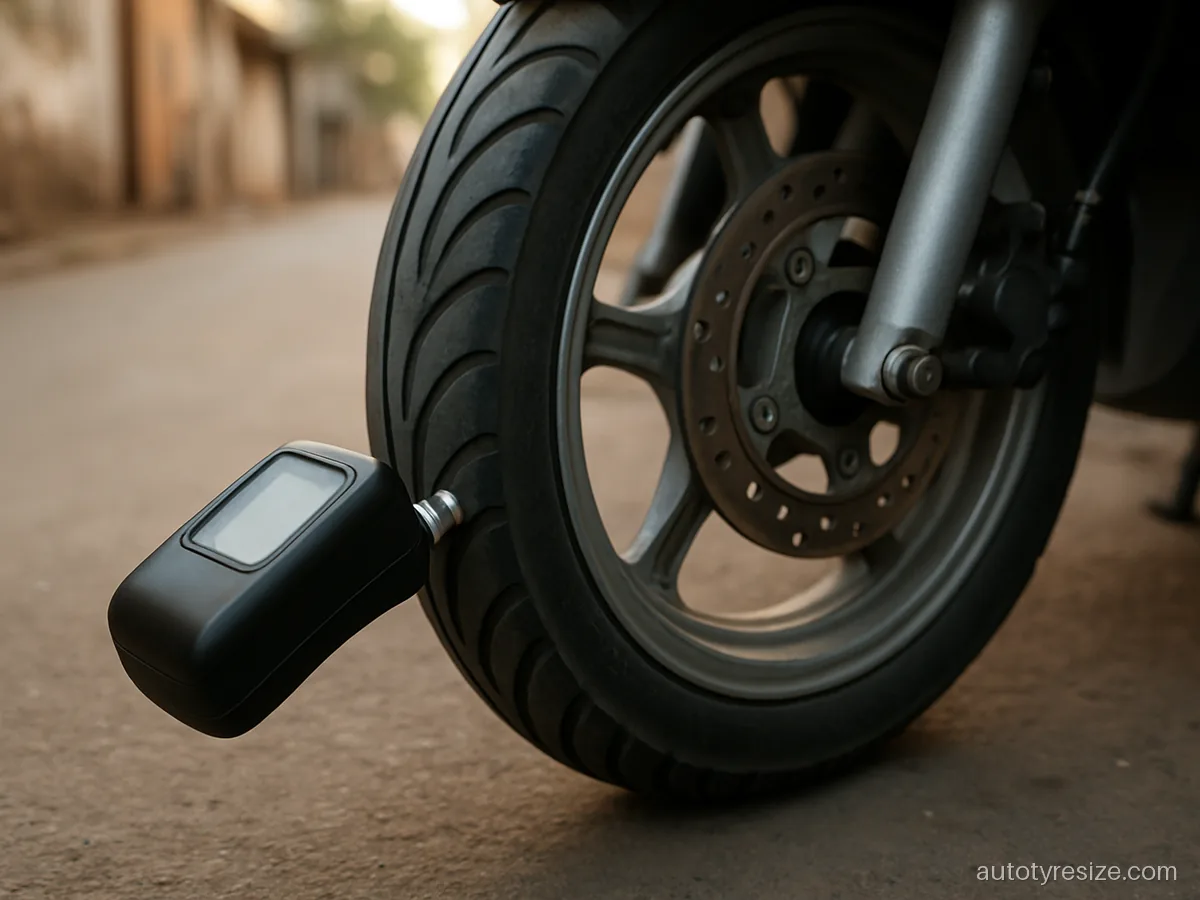
Yamaha Ray ZR tyre pressure chart
| Load | Front | Rear |
|---|---|---|
| One rider | 22 psi | 29 psi |
| Rider and pillion | see manual | 36 psi |
We found no published front figure for two-up riding, so keep 22 psi in front unless your handbook states a different value. The rear values come from spec listings rather than the maker's own page, so confirm them in your manual.
Bar and kPa equivalents
| psi | bar | kPa |
|---|---|---|
| 22 | 1.52 | 152 |
| 29 | 2.00 | 200 |
| 36 | 2.48 | 248 |
Any other figure can go through the tyre pressure converter, handy when a digital machine shows only bar. Write your three numbers on a slip and keep it in the under-seat boot, so you never have to search for them while a queue waits behind you at the pump.
Why the small rear wheel needs care
A 10 inch rear wheel holds less air than a motorcycle wheel, so a loss of just a few psi changes its shape a lot. On the RayZR, a soft rear makes the scooter feel wobbly when you lean into a turn and lets the tyre heat up on long rides. Because removing that wheel is a bigger job than on a motorcycle, keeping the pressure right is also the cheapest way to make the tyre last.
Filling air on a scooter with small wheels
Petrol pump chucks are often long and stiff. With a 10 inch rim, the valve tucks in beside the drum and silencer, so roll the scooter a little until the valve stem points downward or backward and is easy to reach. Push the chuck straight on. Set 22 for the front first, then change the machine to 29 or 36 for the back.
For a reliable reading, keep a gauge under the seat. Our pressure checking guide shows each move, and scooty tyre pressure covers scooters in general.
Over and under inflation on this scooter
- Front below 22: heavy steering at walking pace, faster wear on the edges, and a sharp jolt through the bars on potholes.
- Rear below 29: mileage drops, the sidewall bends too much and runs hot, and speed breakers can dent the rim.
- Too much air: the scooter skips across bumps and grips less on wet tar or painted road markings.
Pressure checks for rain and summer
Monsoon riding on a small wheeled scooter needs every bit of grip. Keep the pressure at the stated figure; do not deflate for wet roads. In May and June heat, check in the morning before the tarmac warms up. If you park in direct sun all day, the evening reading climbs, and bleeding air at that point leaves the tyre short by morning.
A weekly check catches slow leaks from tiny nails that tubeless tyres hide well.
More RayZR and scooter pages
Rim and tyre details sit on Yamaha Ray ZR tyre size. For other scooters, open the tyre pressure hub, or go straight to Fascino tyre pressure or the Jupiter 125 tyre pressure guide. Those scooters ride on different wheel sizes, so their numbers are not a substitute for the RayZR figures above.
Questions owners ask
Front psi on a RayZR 125?
22 psi cold for a solo rider.
Rear psi on a RayZR 125?
29 psi cold solo; 36 psi once a second person sits behind you.
Why such a low front figure?
The front of a scooter carries little weight, and the tyre is small. A higher figure would make the front skip over bumps and reduce grip.
Could I just run 30 psi all round?
That over-fills the front and leaves the rear slightly low. Use 22 front and 29 rear.
Where can I find the official RayZR tyre pressure?
In the owner's manual, in the maintenance or specifications section. The sidewall number is a maximum, not the fill figure.