
The XL 100 alloy wheels are 16 inch black rims that TVS fits solely to the HD Alloy, which is also the only XL100 with tubeless tyres. The Heavy Duty, Heavy Duty i-Touchstart, Comfort i-Touchstart and Win Edition all leave the showroom on 16 inch wire wire wheels carrying tubed tyres.
Many owners of older spoke models now want the alloy look and the tubeless convenience. This page sets out which wheel each version gets, whether a spoke model can be converted, and how to look after either kind of wheel on a moped that carries heavy loads.
XL100 fitment card
- Tyre size
- 2.50-16 front and rear, every variant
- Wheels
- 16 inch spoke (Heavy Duty, Comfort, Win Edition), 16 inch alloy (HD Alloy)
- Tyre type
- Tube type on spoke wheels, tubeless on the HD Alloy
- Tyre pressure (cold)
- Front 25 psi; rear 35 psi solo, 40 psi with pillion or load
- Ply and load
- 6 ply, load index 41L
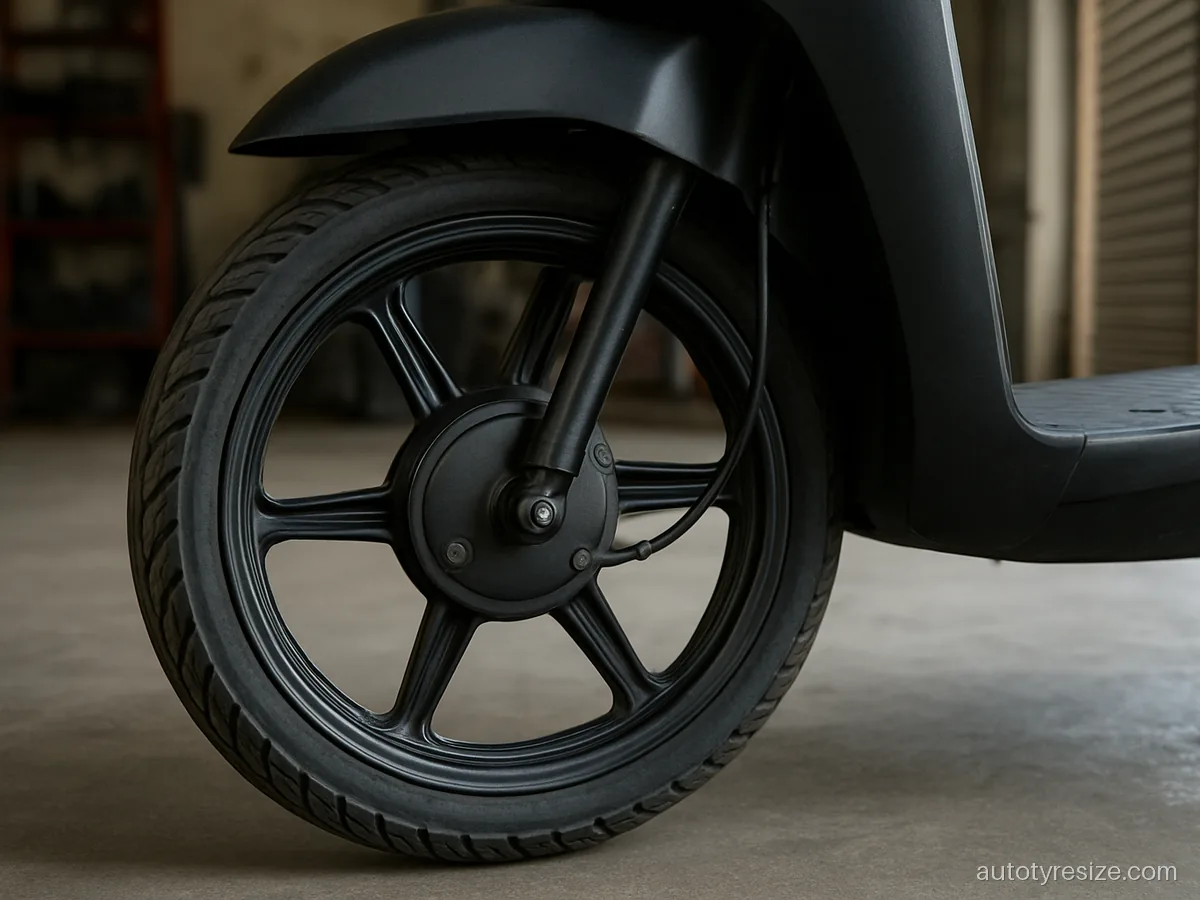
Which XL100 has alloy wheels
| Variant | Wheel | Tyre |
|---|---|---|
| Heavy Duty (kick start) | 16 inch spoke | 2.50-16 tube type |
| Heavy Duty i-Touchstart | 16 inch spoke | 2.50-16 tube type |
| Comfort i-Touchstart | 16 inch spoke | 2.50-16 tube type |
| Win Edition | 16 inch spoke | 2.50-16 tube type |
| HD Alloy (top variant) | 16 inch black alloy | 2.50-16 tubeless |
The rim diameter is 16 inch in every case, so the tyre size stays 2.50-16. On the alloy model a cast wheel replaces the spokes and seals air on its own.
Why TVS added XL 100 alloy wheels
A spoke wheel needs a tube, and a tube punctures fast: once a nail goes in, the moped is flat within minutes. On a cast wheel, a tubeless tyre seals around the nail and loses air slowly, giving a goods rider minutes, not seconds, to reach help. Alloys also need no spoke tightening and do not rust at the nipples after monsoon rides. The trade off is that a cast rim can crack on a hard hit with a heavy load, while a spoke rim bends and can usually be trued.
Converting a spoke XL100 to alloys
It is possible to bolt the HD Alloy's wheels onto an older spoke model, but check a few things before you buy:
- The hub, brake drum and axle must match. Get the TVS workshop to match part numbers for your frame.
- Second hand alloy rims from other mopeds may not suit the XL's drum brakes or axle size.
- Let the insurer know, and store the spoke wheels for resale day.
A cheaper route for puncture worries is a good quality thick tube and sealant, though it never matches a true tubeless setup. See spoke versus alloy wheels for the wider comparison.
Looking after spoke wheels
Spokes loosen over time, especially on a moped that carries cylinders over speed breakers. Tap each spoke with a small spanner: a dull note means it is loose. Leave tightening and truing to a mechanic, because uneven tension warps the rim. Wipe the nipples after riding through floodwater and add a light coat of oil to slow rust.
Caring for the HD Alloy rims
Rinse the black rims, scrub gently with diluted soap, then wipe dry. Avoid harsh acid cleaners from roadside washers, which strip paint. Check the bead area for dents after a pothole hit: a dented lip lets a tubeless tyre lose air slowly. For a lone rider TVS says 25 psi ahead and 35 psi aft, and 40 psi for the XL rear once cargo goes on. Low pressure is the fastest way to dent an alloy.
Cracks, dents and when to replace
Minor edge dents can often be pressed out at a wheel repair shop. On spoke wheels, a broken spoke should be replaced quickly, since the load shifts to the others and more will follow.
More XL100 and wheel guides
Tyre size and pressure details are on the XL 100 tyre size page. For tubes, see tyre tube. Our alloy wheels hub covers bikes, scooters and cars, and alloy wheels for Splendor is a useful read for commuter bike owners thinking about the same switch.
Questions owners ask
Does every XL100 get alloys?
No, just the HD Alloy version. All other variants use 16 inch wire wheels carrying tubed tyres.
What size are the XL100 alloy wheels?
They are 16 inch, the same diameter as the spoke wheels, so the 2.50-16 tyre size is unchanged.
Is an alloy conversion possible on an XL100 Heavy Duty?
It can be done with the factory alloy wheels if the hub, drum and axle match. Have the TVS workshop verify the parts for your frame first.
Is the XL100 HD Alloy tubeless?
Yes. It is the only XL100 that comes with tubeless tyres from the factory.
Are spoke wheels stronger than alloys for carrying loads?
Spoke wheels flex and can be trued after a hard hit, while alloys may crack. Alloys need less upkeep and suit tubeless tyres. Either type copes when inflated as TVS advises.