
Ask any VW workshop and the Virtus tyre pressure for daily use comes back as 33 psi for each wheel, checked cold, on the 205/55 R16 rubber shared by every trim. The same figure applies to the 1.0 TSI and the 1.5 TSI GT.
For a full car with luggage, the pressure goes up, and Volkswagen lists that heavier setting on a sticker fixed to the car, repeated in the owner's manual. Some charts online quote very high loaded numbers that do not look right, so take yours from the label, not from a website.
Virtus fitment card
- Tyre size
- 205/55 R16 on every variant
- Wheels
- 16 inch steel with cover (Comfortline), 16 inch alloy (Highline and above)
- Alloy finish
- Silver (Highline), diamond cut (Topline), black (GT versions)
- Tyre pressure (cold)
- Front 33 psi, rear 33 psi at normal load
- Spare
- 15 inch steel spare, 195/65 R15, for temporary use
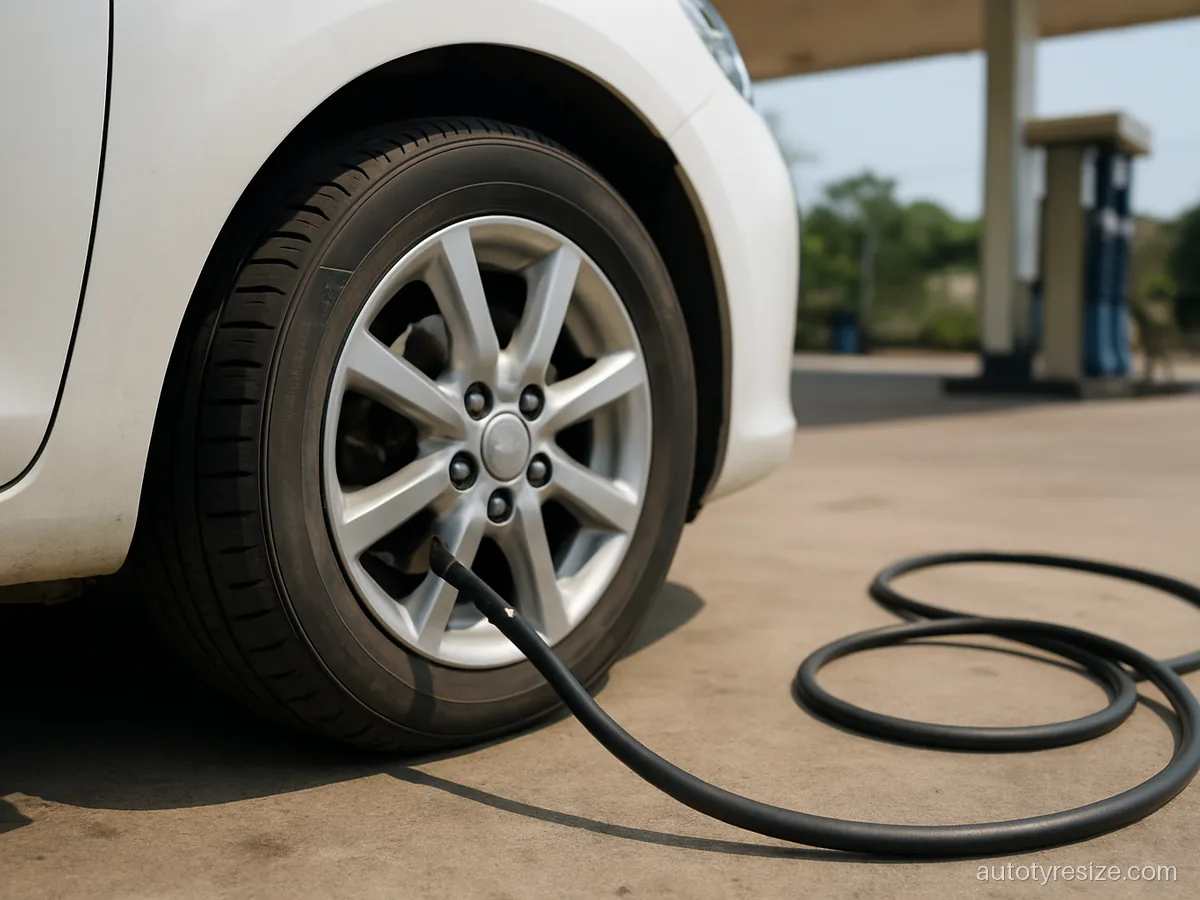
Volkswagen Virtus tyre pressure chart
| Load | Front | Rear |
|---|---|---|
| Normal load, up to about 3 people | 33 psi | 33 psi |
| Full load, 5 people and luggage | See the car's label | See the car's label |
| Spare (195/65 R15) | See the label or manual | - |
The label usually shows several columns for different loads and sometimes an eco setting. Read across to the row for 205/55 R16. Sticker torn off or faded? The same grid appears in the Virtus handbook.
Where to find the label on a Virtus
Volkswagen places a tyre pressure sticker on the car itself. On many VW models it is inside the fuel filler flap; on others it sits on the driver door frame. Check both places on your Virtus. Ignore the bigger number embossed on the tyre wall; it states what that tyre can tolerate, not what a sedan should carry.
Virtus figures on a bar or kPa dial
| psi | bar | kPa |
|---|---|---|
| 33 | 2.3 | 228 |
Some VW labels and many digital pumps show bar first. 2.3 bar is the same as 33 psi. For any other figure on your label, use our tyre pressure converter before typing the number into the pump.
Filling the Virtus at a petrol pump
- Fill within the first couple of kilometres from home, while the tyres are cold.
- Set the pump to 33 psi and do all four wheels the same, unless you are loaded.
- The 16 inch rims put the valve close to the wheel spokes on alloy cars; turn the wheel slightly if the nozzle will not sit straight.
- Open the boot floor every couple of months and check the spare too.
- Your own gauge, tucked into a door bin, exposes any air machine that reads wrong.
Highway trips and full loads
Seat five adults and fill the boot for a highway run, and the Virtus rear tyres carry far more than on a solo commute. Before setting off, add air up to the sticker's loaded setting, then let it back down when daily use returns. The GT's stronger engine and higher cruising speed make this more important, because a soft, heavily laden tyre runs hottest. Check pressures again once the car has cooled at a long halt.
Monsoon driving and pressure
Releasing air in the rains buys no extra grip. A 205 wide tyre relies on correct inflation to hold its channels open and sweep water aside; underinflated, it skates on a flooded flyover far sooner. Should a tyre warning symbol glow on your dash, believe it even when the tyre looks round. The warning light explainer covers next steps.
What wrong pressure feels like in a Virtus
- Under inflated: heavier steering, a floaty feel over undulations, worn outer shoulders and a drop in fuel economy.
- Over inflated: a busy, thumpy ride over expansion joints, the tread centre wearing first, and shorter stopping distance lost on wet roads.
- One tyre losing air: usually a screw picked up in traffic or a rim dented by a pothole. A tyre shop visit beats topping up twice a week.
Every trim's tyre appears under Virtus tyre size, and general guidance is in the tyre pressure hub. Rivals with the same 33 psi figure include the Verna tyre pressure page.
Questions owners ask
How many psi does a VW Virtus need?
33 psi in every tyre for normal loads, filled cold, which is about 2.3 bar.
Is the Virtus GT tyre pressure different?
The GT uses the same 205/55 R16 tyre size and the same 33 psi normal load figure. Check the label on your car for the loaded setting.
Fully packed Virtus: how much air?
Read the loaded column on the car's own sticker or handbook. A few web charts print figures that look far too high, so trust the car.
Is nitrogen useful in a Virtus?
It escapes a touch more slowly, but plain air at 33 psi is just as good. A fortnightly gauge check matters more than what you fill with.
Why does my Virtus read higher after a drive?
Driving heats the air inside, pushing the reading up a few psi. Set pressure only on cold tyres, and leave a warm tyre's reading alone.