
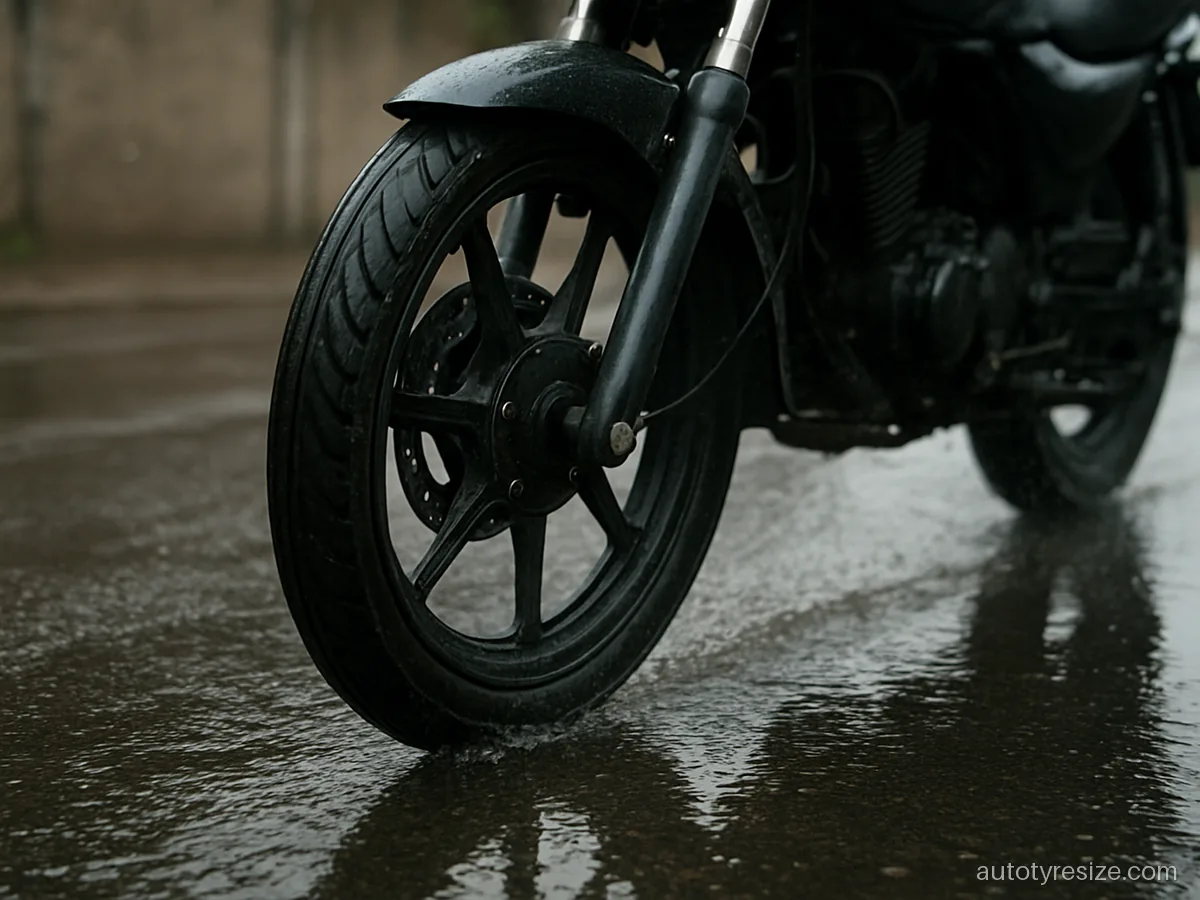
Tyre grip is the friction between the rubber and the road, and it depends mostly on the rubber compound, the tread pattern, the tyre pressure and the age of the tyre. Tread depth matters on wet roads, but a deep tread made of old, hard rubber can still slide.
Riders ask us every day which tyre gives the best grip for their bike or scooter. The honest answer depends on how they ride and where. Below we explain the parts of grip you can control, the main tread types, and why the roadside trick of cutting fresh grooves into a worn tyre is a bad idea.
At a glance
- Biggest factorsRubber compound, tread pattern, pressure, temperature, age
- Soft compoundMore grip, shorter life
- Hard compoundLonger life, less bite on wet roads
- Wet gripNeeds open grooves and sipes to push water away
- Grip cuttingRegrooving is only for tyres marked REGROOVABLE
- Old rubberHardens with age and loses grip even with tread left
Four things that decide tyre grip
- Compound. Softer rubber shapes itself into the tiny bumps of the road surface and holds better, but it wears faster. Harder rubber lasts longer but slips sooner, especially when cold or wet. Many modern tyres add silica to improve wet grip without giving up too much life.
- Tread pattern. On dry tarmac, more rubber touching the road helps. On wet roads, grooves and thin slits called sipes carry water out from under the tyre.
- Pressure. Too much air shrinks the footprint; too little makes the tyre squirm and overheat. Fill to the cold figure in your manual.
- Age and heat. Rubber hardens with years of sun. An old tyre feels nervous on a wet morning even with tread left. Check its date with our manufacturing date guide.
Bike tyre grip types by tread pattern
| Type | Looks like | Best for |
|---|---|---|
| Commuter road | Moderate grooves, long life compound | Daily city and highway riding |
| Sport or street | Few grooves on the shoulders, softer rubber | Dry roads and spirited riding; wears faster |
| Dual purpose | Chunky blocks with gaps | Mixed tarmac and gravel, touring on rough routes |
| Knobby off road | Tall separate knobs | Mud and dirt; poor on wet tarmac |
| Dual compound | Harder centre, softer edges | Long life upright, grip when leaned over |
These tyre grip types are the same ideas used for cars, where buyers weigh highway tread against chunkier off road designs.
Which tyre grip is best for a bike
For most commuter riders, the best grip tyre for a bike is a recently made street tread, sized as listed in our two wheeler size tables, and inflated correctly. A soft sport tyre on a commuter only wears out sooner without making the ride safer, because you rarely use its extra dry grip in traffic.
If you ride often in heavy rain, look for a pattern with plenty of grooves running towards the edges and a compound described as wet focused. If you ride on village roads and broken patches, a mild dual purpose pattern helps. Off road knobbies are a poor choice for a daily ride on tarmac.
Best grip tyre for a scooter
Scooters run 10 to 12 inch wheels with small footprints, so they are more sensitive to grip than motorcycles. A grip tyre for a scooter should have a road pattern with good water channels, the correct load index for two up riding, and fresh rubber. Tubeless tyres are now common on scooters and do not lose air suddenly after a nail, which helps you stay upright.
Scooter riders slip most often on painted zebra lines, metal covers, spilled diesel and sand at the road edge. No tyre can fully grip on those, so slow down and stay upright over them.
The tyre grip cutting tool: why we refuse
Some roadside shops use a heated blade, sold as a tyre grip cutting tool, to cut new grooves into a worn bike or car tyre so it looks freshly treaded. This is called regrooving. Tyre makers allow it only on tyres moulded with the word REGROOVABLE on the sidewall, mostly truck and bus tyres with extra rubber under the tread for this purpose. Car and two wheeler tyres do not carry that marking.
Cutting into an ordinary tyre thins the rubber over the belts, so a nail or stone reaches the casing faster, and the tyre can run hot and fail. If your tyre is worn to the bars, replace it; our tyre tread guide shows how to judge it.
Grip on wet monsoon roads
The first rain after a dry spell is the slipperiest, because oil and rubber dust on the road float up with the water. Grip drops further at speed, when a layer of water can lift the tyre off the road. To stay safe: keep at least half of the original tread, run correct pressure, brake earlier and more gently, and avoid sudden steering on painted lines.
On cars, worn tyres combined with wide low profile sizes are more likely to aquaplane in standing water; our low profile tyres page explains why.
Small habits that keep grip high
- Check pressure weekly with a gauge; see bike tyre pressure for two wheeler figures.
- Scrub new tyres in gently for the first 100 km or so; a fresh tyre has a slippery surface from the mould.
- Wash off any tyre shine spray from the tread and edges of bike tyres.
- Replace a tyre that has hardened or cracked, even with tread left.
- Keep the same pattern on both wheels of a bike unless the tyre maker pairs them differently.
For more tyre care topics, start from our home page.
Questions owners ask
Which tyre grip is best for bike riding in the city?
A road pattern tyre with a long life compound in the correct size suits most city riders. Keep it at the right pressure and replace it before the wear bars. Sport compounds add little in traffic and wear out sooner.
Is a soft tyre better for grip?
Softer rubber grips better, especially in the dry, but wears faster. Most riders get the best balance from a road tyre with a medium compound or a dual compound design.
Can I cut grooves in my worn tyre for more grip?
No. Regrooving is only allowed on tyres marked REGROOVABLE, which car and two wheeler tyres are not. Cutting thins the rubber and can cause failure. Replace the tyre instead.
Do tubeless tyres have better grip?
Grip comes from rubber and pattern, not from the tube. Tubeless tyres help by losing air slowly after a puncture, so the tyre keeps its shape for longer.
Why does my new tyre feel slippery?
New tyres carry a smooth layer from the mould. Ride gently, avoid hard leaning and braking for the first stretch, and the surface will roughen and grip properly.
Does tyre pressure affect grip?
Yes. Too much pressure shrinks the contact patch and too little makes the tyre squirm. The handbook's cold figure gives the footprint the designers intended.