
Kawasaki sets the Ninja 300 tyre size at 110/70-17 up front and 140/70-17 behind, tubeless Kawasaki rubber on twin 17 inch alloys. Those numbers have not changed across the Indian life of this twin, so an early Ninja 300 and a fresh one share tyres.
The Kawasaki handbook asks for 28 psi on the Ninja front and 32 psi behind, measured cold, with no separate pillion setting. Below: the codes explained simply, the 150 rear tyre debate, and how a Ninja rider can judge worn rubber.
Ninja 300 fitment card
- Front tyre
- 110/70-17 tubeless
- Rear tyre
- 140/70-17 tubeless
- Wheels
- 17 inch alloy front and rear
- Tyre pressure (cold)
- Front 28 psi, rear 32 psi (200 and 225 kPa), solo or with pillion
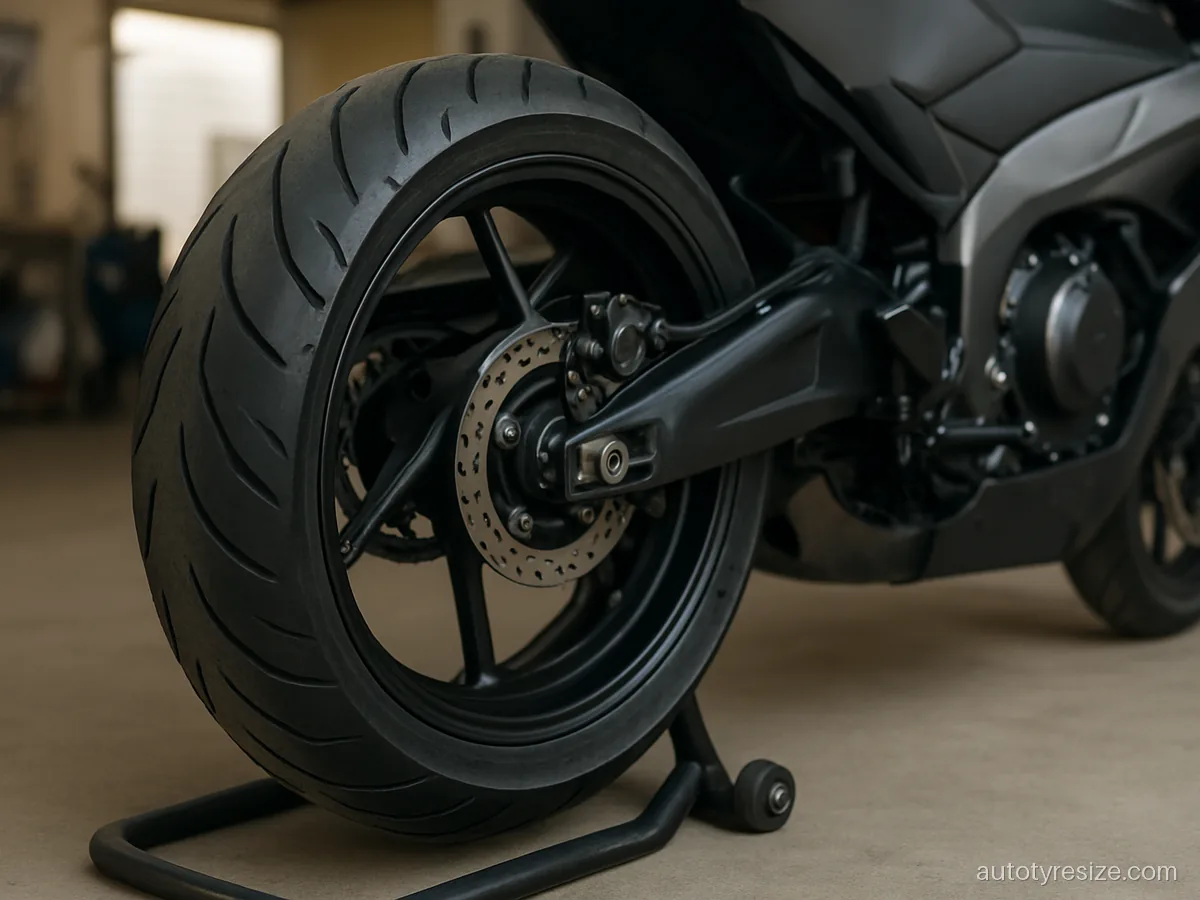
Ninja 300 tyre size table
| Position | Size | Wheel | Cold pressure |
|---|---|---|---|
| Front | 110/70-17 | 17 inch alloy | 28 psi (200 kPa) |
| Rear | 140/70-17 | 17 inch alloy | 32 psi (225 kPa) |
Kawasaki keeps one pair of Ninja 300 values whether the pillion seat is empty or occupied. Set them before setting off, then recheck the next morning after any long expressway day.
Decoding 110/70-17 and 140/70-17
- 110 and 140: millimetres of tread across each Ninja tyre. The broad rear handles the parallel twin's drive and a pillion's weight.
- 70: profile; Ninja sidewalls stand near 77 mm (110 tyre) and 98 mm (140 tyre).
- 17: both Kawasaki rims measure 17 inches.
Add rim and sidewalls and the front tyre stands close to 586 mm (431.8 + 154), the rear close to 628 mm (431.8 + 196). Shopping for replacements, note the Ninja's load code and speed symbol beside the size and reject lower ratings, since this machine spends time at high expressway speeds. Kawasaki speed letters get a full table in our speed rating guide.
Is a 150 rear worth fitting to a Ninja 300?
Plenty of owners want a fatter rear for looks. A 150/60-17 is about 612 mm tall, near 2.5 percent under the Kawasaki fitment. It may squeeze in, with catches:
- Stretching a 150 over a rim designed around 140 flattens the profile, so the Ninja leans in more lazily.
- Chain, swingarm and hugger clearance must be checked on the bike, with full air.
- The speedo reading drifts.
Riders chasing grip do better with a stickier compound in the Kawasaki 140/70-17 size. Any Ninja size pair can be checked in our tyre size calculator.
Keeping Ninja pressures right on Indian roads
Those 28 and 32 psi values suit everyday riding. Warm tyres read high, so a pump gauge after a 30 km sprint will flatter you; never bleed a warm Ninja tyre to match a cold figure. During the monsoon, full pressure keeps the grooves open to shed water. A soft Ninja front makes slow U turns heavy and cooks itself over long highway legs. For more, open the bike tyre pressure guide, while the psi to bar converter handles foreign gauges.
Signs your Ninja needs new rubber
- Grooves level with the wear markers, or a flat strip down the rear centre after touring.
- Fine cracks from months of parking under the sun.
- A slash, swelling or old plug near the shoulder; ride the Ninja gently to a tyre dealer; a fitter will say whether the casing survived.
- A DOT date older than about five years, explained in the date code guide.
Fresh tyres feel slippery at first, so treat the first 100 km on a new Ninja set with care.
Punctures on the Ninja 300
Kawasaki fits tubeless tyres, so a Ninja with a nail in its tread usually leaks slowly and a roadside plug often gets the Ninja home. Pack a compact kit and mini pump for touring. Holes near the shoulder or in the sidewall mean a new tyre, not a plug. The tubeless tyre guide sets out the limits.
Comparing Ninja 300 sizes with other sports bikes
Group rides mix many machines, and tyre sizes vary between them. The R15 and Duke 250 pages show two popular alternatives, and other makers appear beside Kawasaki throughout our bike tyre size directory. Never assume two sports bikes share a rear size just because they look alike.
Questions owners ask
Which tyres does a Ninja 300 take?
A 110/70-17 front and a 140/70-17 rear, both tubeless, on 17 inch alloys.
How much air for Ninja 300 tyres?
Kawasaki's handbook says 28 front, 32 rear, in psi, on cold Ninja tyres. Kawasaki keeps those values with a pillion aboard.
Does a 150 rear suit the Ninja 300?
A 150/60-17 can fit, but steering slows and clearance must be checked. Most riders are happier keeping the 140/70-17.
Does the Ninja 300 need tubes?
No. Kawasaki fits tubeless tyres on its alloy wheels, so most Ninja tread punctures are plugged with the alloy left in place.
How many kilometres do Ninja tyres give?
That depends on the rider. Wheelspin starts and track days eat a Ninja rear quickly. Replace at the markers or when ageing cracks appear.
Must replacement Ninja tyres match the speed rating?
Yes. Equal or beat the speed symbol and load code moulded on the original Kawasaki tyres.