
For the correct Ignis tyre pressure, go by the cold number Maruti printed for 175/65 R15 tyres on a label by the driver seat, repeated inside the handbook. We are not quoting a single number here because published tyre guides give three different answers for this car.
That label takes ten seconds to read and is written for your exact car. Below is why the web figures clash, how to read the label and fill correctly, and what wrong air does to this light hatch.
Ignis fitment card
- Tyre size
- 175/65 R15 on every variant, Sigma to Alpha, petrol and earlier diesel
- Wheels
- 15 inch steel (Sigma, Delta with full covers), 15 inch alloy (Zeta, Alpha)
- Tyre pressure (cold)
- Read the driver door sticker; published guides disagree
- Rim
- 15 x 5J
- PCD
- 4 x 100 mm, centre bore 54.1 mm
- Spare
- Full size 175/65 R15 on a steel wheel
- Wiper blades
- 21 inch driver side; passenger side 18 or 19 inch, measure the old blade
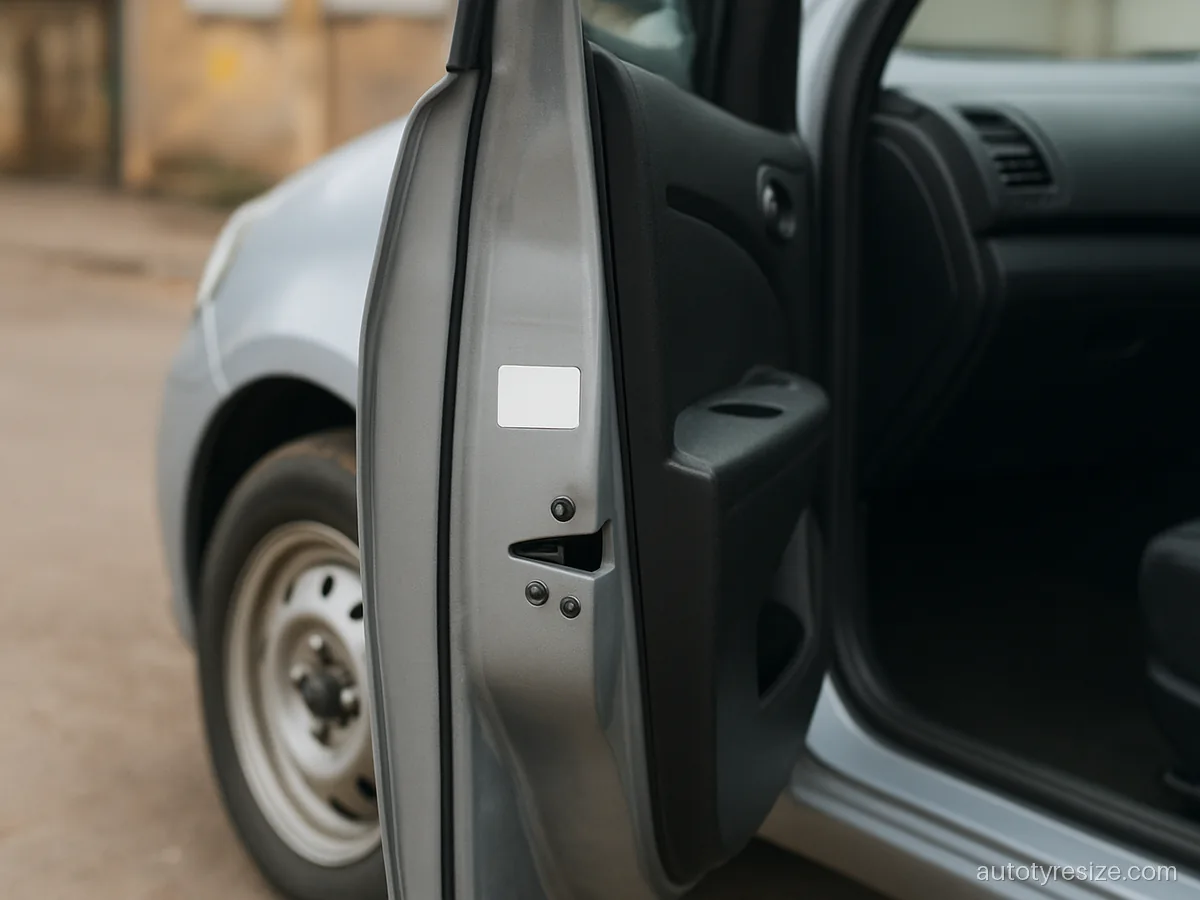
Finding the Ignis tyre pressure label
Open the driver side door completely and study the painted pillar it shuts onto. A small Maruti panel there lists tyre size plus separate front and rear cold values, with a heavy load row on some cars. The glovebox handbook repeats it in its inspection chapter. If the label is missing on a used car, the Nexa service desk can read the figure from its records for your chassis.
Why online numbers disagree
| Published guide | Front | Rear |
|---|---|---|
| Tyre data site | 36 psi | 32 psi |
| Used car guide | 32 psi | 30 psi |
| Pressure database | 33 psi | 36 psi |
At most one of those can match Maruti, and one reverses which axle gets more. Some may come from overseas versions of the car. That is exactly why the label in your own door frame matters more than any website, this one included.
Filling 175/65 R15 tyres cold
- Note the front and rear numbers from the door label; they may differ.
- Check before driving, or after the car has rested for three hours.
- Use your own pocket gauge to read each tyre first.
- At the pump, set the machine to the label figure for that axle.
- Recheck with your gauge, then cap the valves.
Filling straight after a long run? Hot Ignis tyres show 2 to 4 psi extra. Add that margin and correct it next morning.
Switching between psi, bar and kPa
Your label may show kPa while the pump shows psi. As a guide, 1 bar is 100 kPa or about 14.5 psi, so 220 kPa is about 32 psi and 250 kPa is about 36 psi. Use the tyre pressure converter for the exact value from your label.
Ignis handling on wrong air
The Ignis is a light car with a tall body, so pressure changes show up quickly in how it drives. Underfilled, the Ignis rolls and sways through quick swerves, heat up on the highway, wear both edges and raise fuel use. Over filled tyres make it bounce over speed breakers, reduce the contact patch and wear the middle of the tread. On wet monsoon roads, the label figure gives the grooves their full shape to clear water.
Loads, highways and hill roads
With four adults and weekend bags in the small boot, the rear tyres take the extra weight. Where Maruti's panel prints a heavy load row, switch to it before departure and drop back afterwards. If it lists only one figure, do not invent a higher one; ask a tyre shop to suggest a safe setting for the load. On ghat roads, check pressure at a cool stop rather than right after a long descent.
Questions owners ask
How much air does a Maruti Ignis need?
Follow the cold value on Maruti's door pillar panel or in the handbook. Published guides give conflicting numbers for this car.
Is the Ignis front pressure different from the rear?
Several guides show different front and rear numbers, but they do not agree which is higher. Your door label settles it.
Does the Ignis Alpha need different pressure from the Sigma?
Since Sigma through Alpha share one tyre, one label value serves every Ignis.
Can I fill 36 psi in all four Ignis tyres?
Only if your door label says so. Filling above the label figure gives a harsh ride and faster centre wear.
Why do forecourt machines disagree with my gauge?
Forecourt sensors get knocked about daily. A personal gauge checked against a second gauge now and then is more reliable.