
Most published data puts the Ciaz tyre pressure at 29 psi on every wheel, cold, whether your sedan wears 15 inch or 16 inch rubber. A couple of used car guides quote 32 or 33 psi instead, so let the Maruti printed label in the door frame decide for your own car.
That label, and the table in the owner's manual, also show whether Maruti wants more air when the boot is full. The big psi value embossed on each tyre is only a casing limit, so ignore it at the pump.
Ciaz fitment card
- Tyre size
- 185/65 R15 on Sigma, Delta, Zeta; 195/55 R16 on Alpha
- Wheels
- 15 inch steel (Sigma), 15 inch alloy (Delta, Zeta), 16 inch alloy (Alpha)
- Tyre pressure (cold)
- 29 psi front and rear in most guides; confirm on the driver door sticker
- PCD
- 4 x 100 mm, centre bore 54.1 mm
- Rim width and offset
- 15 x 5.5J ET38, 16 x 7J ET35
- Wiper blades
- 24 inch driver side, 16 inch passenger side (check the old blades)
- Status
- No longer sold new
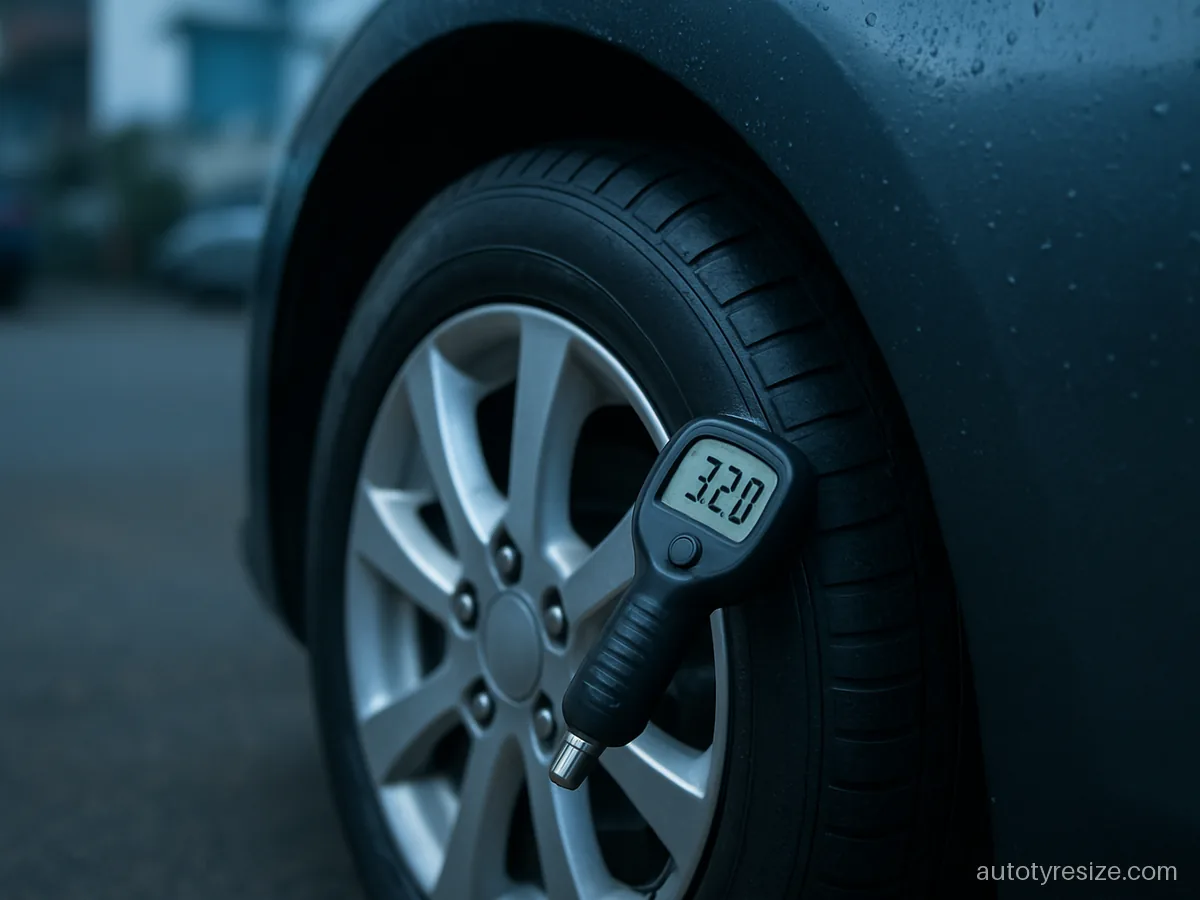
Ciaz tyre pressure at a glance
| Tyre | Front | Rear |
|---|---|---|
| 185/65 R15 (Sigma, Delta, Zeta) | 29 psi | 29 psi |
| 195/55 R16 (Alpha) | 29 psi | 29 psi |
| Full load | See the door label; guides disagree | |
Why the numbers online differ
Owners searching the web find 29, 32 and 33 psi quoted for this sedan. Three tyre data sources agree on 29 psi for normal driving. The higher numbers mostly appear in general car buying articles. Older Ciaz cars and the facelift may carry different labels, and some cars have had their tyres changed. The fix is simple: swing the driver door open, read the Maruti panel stuck on the frame, and follow the row for your tyre size.
Bar and kPa for the Ciaz
On a metric gauge, 29 psi shows as roughly 2.0 bar or 200 kPa. Should your label differ, convert that Maruti value with the tyre pressure converter ahead of keying values into a metric machine.
A sedan with four aboard and a full boot
The Ciaz is popular for family trips and airport runs, often with a big boot full of bags. Extra weight squashes the rear tyres and makes them run hotter on the expressway. If the door label lists a loaded figure, use it before you leave. If it does not, a tyre shop can advise based on the load index of your tyres. Return to the normal setting after the trip, since a lightly loaded sedan over inflated will feel skittish on wet roads.
Reading the gauge right
- Measure while the Ciaz has not moved since overnight parking.
- Unscrew the dust cap and press the gauge firmly on the valve.
- Compare the reading with the door label, not with the pump display.
- Add or release air in short bursts until all four match.
- Check the spare last; it sits in the boot well and is easy to forget.
Warm tyres after a drive read about 2 to 4 psi high, so do not bleed them down.
How a Ciaz behaves on wrong air
Run this sedan soft and parking manoeuvres feel heavy, wears the tread shoulders and costs fuel, which hurts on a car known for its mileage. On the 16 inch Alpha, low air lets crater edges reach the rim lip and bend it. An over pumped tyre crashes over expansion joints, wears the centre band and has less rubber on the road during monsoon braking. Hold the label figure and check every fortnight.
Ciaz tyre and wheel links
Each trim's rubber is listed under Ciaz tyre size. Cross shopping sedans? The Honda City tyre pressure page sits alongside dozens more in our tyre pressure index.
Questions owners ask
How much air should a Maruti Ciaz run?
Most data lists 29 psi on all four wheels, cold. Maruti's door frame label overrides any web figure.
Does the Ciaz Alpha need different pressure for 16 inch tyres?
Tyre data repeats 29 psi for the Alpha's 16 inch rubber as well. Its door label shows rows by size.
Could 33 psi harm a Ciaz?
It is above the figure most sources give. The tyre survives, yet ride quality stiffens and the middle tread band goes bald sooner.
Does a Ciaz need extra air for long trips?
Use any heavy load row printed on that Maruti label. Do not guess a number; ask a tyre shop if the label shows only one figure.
Why does my Ciaz show a higher reading after driving?
Driving heats the trapped air, and hot air pushes harder on the gauge. Readings taken after a drive run 2 to 4 psi high, so always set pressure cold.