
The bullet horn on the current Bullet 350 is a 12 volt electric horn fed by the bike's 12 V DC system and its 8 Ah battery. When it goes quiet or sounds weak, the fault is usually the fuse, a wire or the battery, not the horn itself.
Its current draw and tone are missing from the spec sheet, so when replacing it, carry the removed horn along and match voltage, connector and bracket. Bring a new horn of the same single tone type; the law does not allow multi tone horns.
Bullet 350 fitment card
- Front tyre
- 100/90-19 57P tube type
- Rear tyre
- 120/80-18 62P tube type
- Wheels
- 19 inch front, 18 inch rear wire spoke on every variant; no factory alloy
- Tyre pressure (cold)
- Front 32 psi, rear 32 psi riding solo; rear 36 psi with a pillion
- Brakes
- 300 mm front disc; rear 270 mm disc or 153 mm drum (Military)
- Battery
- 12 V, 8 Ah VRLA maintenance free
- Earlier version tyres
- 3.25-19 front and rear (twinspark engine)
- Earlier version battery
- 12 V, 5 Ah (kick start twinspark engine)
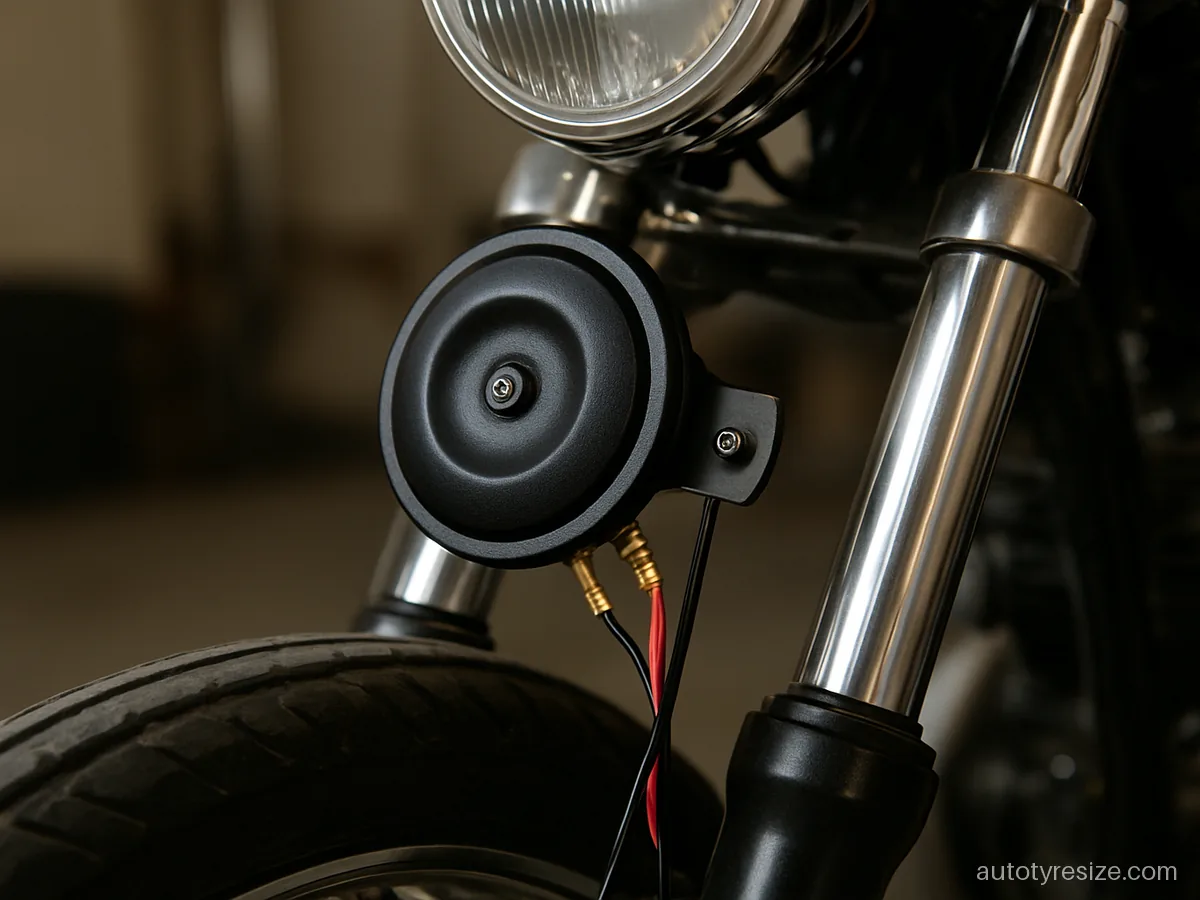
Where the Bullet horn sits and how it is wired
On a classic single like this the horn sits up front, near the headlamp or the frame, where it catches spray from the front wheel, mud and monsoon water first. Two wires reach it: one carries 12 V when you press the button on the left switch cube, the other is the return. Follow the wire from the horn back to the harness before buying parts; a loose spade connector is the most common reason for a silent horn on bikes that see rough roads.
Testing it in five minutes
- Switch the ignition on. With the engine off, press the horn button.
- No sound: check the horn fuse in the fuse box, using the label on the box cover or the manual.
- Still nothing: unplug the horn and, with a test lamp or multimeter, see if 12 V appears at the connector when the button is pressed.
- Voltage present but no sound: the horn is dead or its earth is bad.
- No voltage: the fault is in the switch or the wiring, so look at the left handlebar switch next.
Our horn switch page explains cleaning a sticky button.
Common faults and fixes
| Symptom | Likely cause | First check |
|---|---|---|
| No sound at all | Blown fuse, loose connector or dead switch | Fuse box, then the two spade terminals at the horn |
| Weak, croaky note | Low battery voltage or corroded terminals | Battery charge and the horn earth |
| Works only when bike is running | Battery past its life | Battery test at a parts shop |
| Sounds on its own over bumps | Chafed wire touching the frame | Wiring near the steering head |
| Stops after a monsoon wash | Water inside the horn or the switch | Dry the switch housing, recheck |
A dull horn often points to the battery before the horn. The 8 Ah battery on this electric start bike works hard at every start, and an ageing one reveals itself through a feeble horn and dim indicators. Details are on the Bullet 350 battery size page.
Choosing a replacement Bullet horn
Request a 12 V horn and hand over the old unit for comparison. Check three things side by side:
- The connector: two flat spades of the same width, so you do not cut the harness.
- The bracket: the mounting hole and angle must match, or the horn will vibrate loose.
- The current draw: a louder horn often pulls more current than the factory switch was made for. If it does, a relay is needed; see horn relay.
An original spare from the dealer is the safe choice if you just want the factory note back.
Horn rules Bullet riders should know
Under India's Central Motor Vehicles Rules, a vehicle needs a horn that gives adequate warning, and multi tone horns are not allowed, and a note that startles or shrieks is also off limits. Traffic police in many cities check bikes for pressure horns. Respect no honking zones near hospitals and schools; our no horn sign page explains the signboard. A legal electric horn is enough on this bike; the loud exhaust note already announces you in slow traffic.
Fitting twin or air horns
Some owners add a second horn for highway use. Twin electric horns need a relay and a fused feed straight from the battery, or the switch contacts burn. Compressed air horns are louder still and often cross the legal line. Read air horn before you buy one. Any added load also drains the battery faster if you ride short distances only.
Keeping the horn working through the rains
Point the horn's opening downward so water drains out. After a pressure wash, sound it a few times to push water out of the diaphragm. Spray a little contact cleaner on the connectors twice a year and pull a rubber boot over them. For general horn knowledge, our bike horn guide covers all two wheelers.
Questions owners ask
What voltage is the Bullet 350 horn?
It runs on the bike's 12 volt DC system, so any replacement must be a 12 V horn.
Why is my bullet horn weak?
A tired battery, a corroded earth or water inside the horn are the usual causes. Test the battery first, then clean the connectors.
Is a louder single horn allowed?
A louder single tone electric horn is fine, ideally wired through a relay. Multi tone or harsh sounding horns break the Central Motor Vehicles Rules.
Does the horn work with the engine off?
Yes, as long as the ignition is on and the battery is charged. If it only works with the engine running, have the battery checked.
Where is the horn fuse?
In the fuse box with the other circuits. The label on the box cover or the owner's manual shows which fuse protects the horn.