
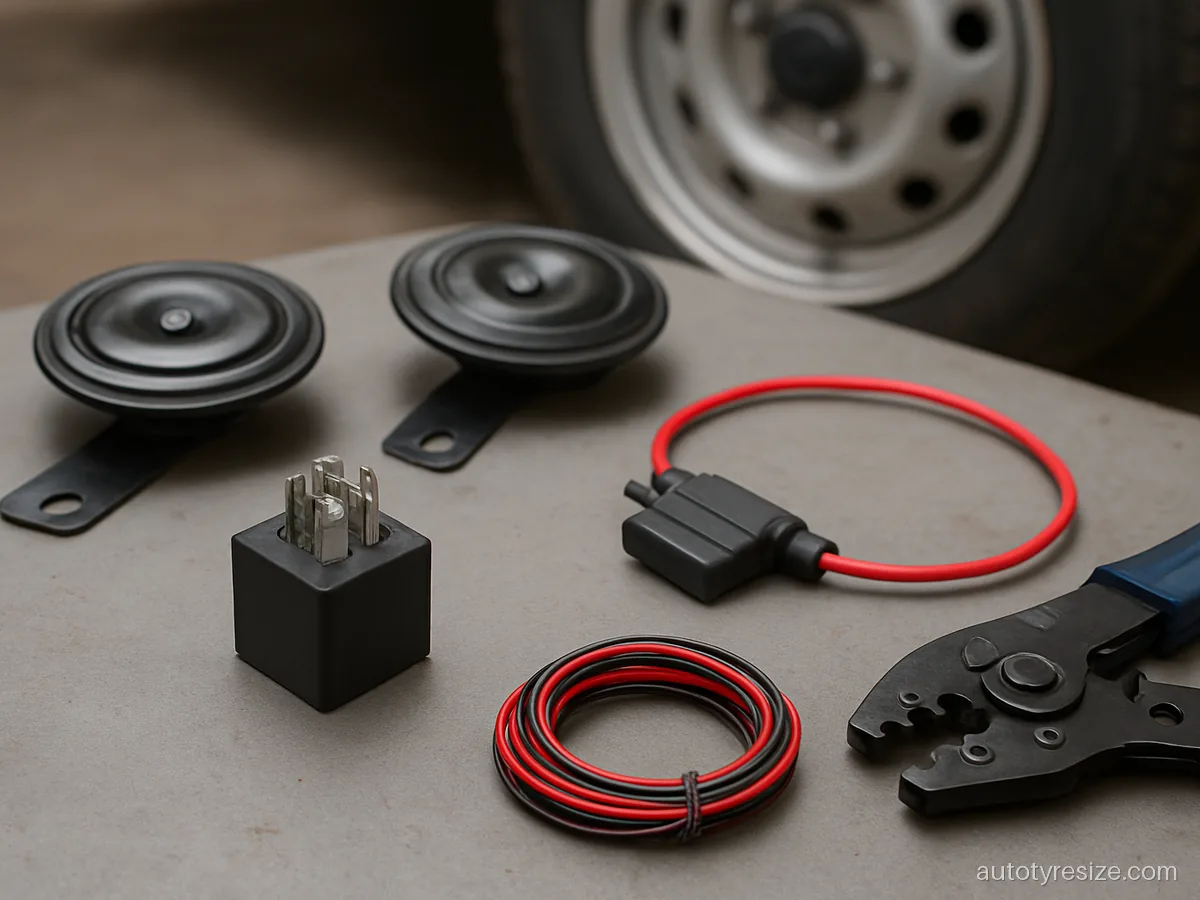
A horn relay is a small electrical switch with a coil inside, which lets the light current through your horn button turn on a much heavier current that goes straight from the battery to the horns. Most cars already have one in the fuse box, and most bikes need one only when you add a second horn or a stronger one.
Without a relay, a hungry horn pulls its full current through the handlebar or steering wheel contacts. The contacts burn, the horn sounds weak, and in time the button stops working. This guide walks through the pins, the wiring and testing. It sits under our bike horn section.
At a glance
- JobLets a light button current switch the heavy horn current
- Coil pins85 and 86, the low current side worked by the horn button
- Load pins30 from fused battery feed, 87 out to the horns
- Five pin relayExtra pin 87a is live when the relay is off; leave it unused
- FuseInline fuse close to the battery on the pin 30 wire
- Quick testPress the horn and listen or feel for a click
What each horn relay pin does
The common automotive relay is a small cube with four or five flat pins, numbered on the base.
| Pin | Side | Connect to |
|---|---|---|
| 30 | Load | Battery positive through an inline fuse |
| 87 | Load | Horn positive terminal |
| 86 | Coil | Switched feed or permanent feed, depending on the vehicle |
| 85 | Coil | Earth, or the horn button wire |
| 87a | Load, five pin only | Nothing for a horn |
Pins 85 and 86 drive a small electromagnet. When current flows through it, the relay clicks and joins 30 to 87, sending battery power to the horns.
Horn relay wiring diagram in plain words
First find out which side your horn button switches. Unplug the horn, switch on the ignition and test the horn wire with a test lamp to earth while a friend presses the button.
- If the wire goes live on pressing: the button switches the positive. Connect that wire to 86 and run 85 to a clean earth.
- If the wire is live all the time: the button switches the earth. Connect the live wire to 86 and the other horn wire, which goes to earth when pressed, to 85.
Then run a new wire from battery positive through a fuse to 30, and from 87 to the positive terminals of both horns. Earth the horns with their own wire to the body or frame. Most standard coils work either way round, but if your relay has a diode printed on the case, follow the marked polarity.
Horn relay for twin horns on a bike
Commuter bikes leave the factory with a single small horn and thin wires sized for it. Add a second horn and the current roughly doubles. A relay keeps that load off the handlebar switch. Mount the relay under the seat or side panel, pins facing down so water cannot sit in it. Use the factory horn plug as your trigger, so you can return to stock by unplugging two connectors. If your switch keeps sticking or the horn stays silent after this, see our horn switch guide.
Choosing the relay and fuse
Buy a 12 volt automotive relay with a current rating comfortably above what your horns draw together. The horn box or label states its current. Pick a fuse a little above the total draw of the horns, never a thick wire or a coin in its place. A rubber or plastic holder with a cap keeps the fuse dry.
Wire thickness matters too. The coil side can use thin wire, but the 30 and 87 wires carry the full horn current and need a heavier gauge, especially for long runs to the front of a car.
How to test a horn relay
- Press the horn. A click from the relay with no sound means the coil works; check the fuse, pin 87 output and the horn itself.
- No click: check for power at 86 and a path to earth at 85 while pressing the button.
- Pull the relay out and swap it with an identical one from the fuse box, such as a spare or the one for a non essential circuit. If the horn now works, the old relay was faulty.
- On the bench, put 12 volt across 85 and 86 and check with a meter that 30 and 87 join.
On cars, also see our car horn fault guide.
Horn relay mistakes that blow fuses
- Running 87 to the horn and also leaving the old feed connected, which shorts when the button is pressed.
- Skipping the fuse on pin 30, so a pinched wire can melt the loom.
- Fitting the relay where wash water or rain hits it directly.
- Using 87a by mistake on a five pin relay, so the horn blows until the button is pressed.
- Poor earths on painted metal; scrape to bare metal and use a ring terminal.
Keep the horn within the rules
A relay makes the horn work properly; it does not make a louder horn legal. Rule 119 of the national motor vehicle rules forbids multi toned horns and any horn whose sound is harsh, shrill or alarming beyond reason. Fit a horn similar in type and loudness to the factory one, and do not use it in areas marked with a no horn sign. Read the air horn guide before considering a compressor type.
Questions owners ask
Do I need a horn relay?
Cars usually have one already. On a bike, you need one if you add a second horn or a horn that draws more current than the factory one, so the switch and wires are not overloaded.
Which pin goes to the battery on a horn relay?
Pin 30, through an inline fuse. Pin 87 goes to the horn, and pins 85 and 86 are the coil worked by the horn button.
Does it matter which way round 85 and 86 go?
On a plain relay without a diode, either way works. If the case shows a diode symbol, follow the marked positive and negative pins.
Why does my relay click but the horn does not sound?
The coil is working, so check the fuse on pin 30, power at pin 87 while pressing, the horn earth wire, and the horn itself by connecting it directly to the battery.
Can I use a five pin relay for a horn?
Yes. Use 30, 87, 85 and 86 exactly as on a four pin relay and leave 87a unconnected.