
The Yamaha XSR 155 tyre size combines 100/80-17 in front and 140/70 R17 out back, tubeless rubber on 17 inch alloys. Only the back tyre uses radial construction; the front keeps a bias carcass.
The XSR is a retro styled roadster that shares its core with Yamaha's sporty 155 cc bikes, so the tyre sizes will look familiar to anyone who has owned one. Owners mostly want to know three things: whether the bike sold here differs from the overseas model, whether chunky retro tyres will fit, and what pressure to run. Each is answered below.
XSR 155 fitment card
- Front tyre
- 100/80-17 tubeless
- Rear tyre
- 140/70 R17 tubeless radial
- Wheels
- 17 inch alloy, front and rear
- Tyre pressure (cold)
- Front 29 psi, rear 33 psi as listed; confirm in the owner's manual
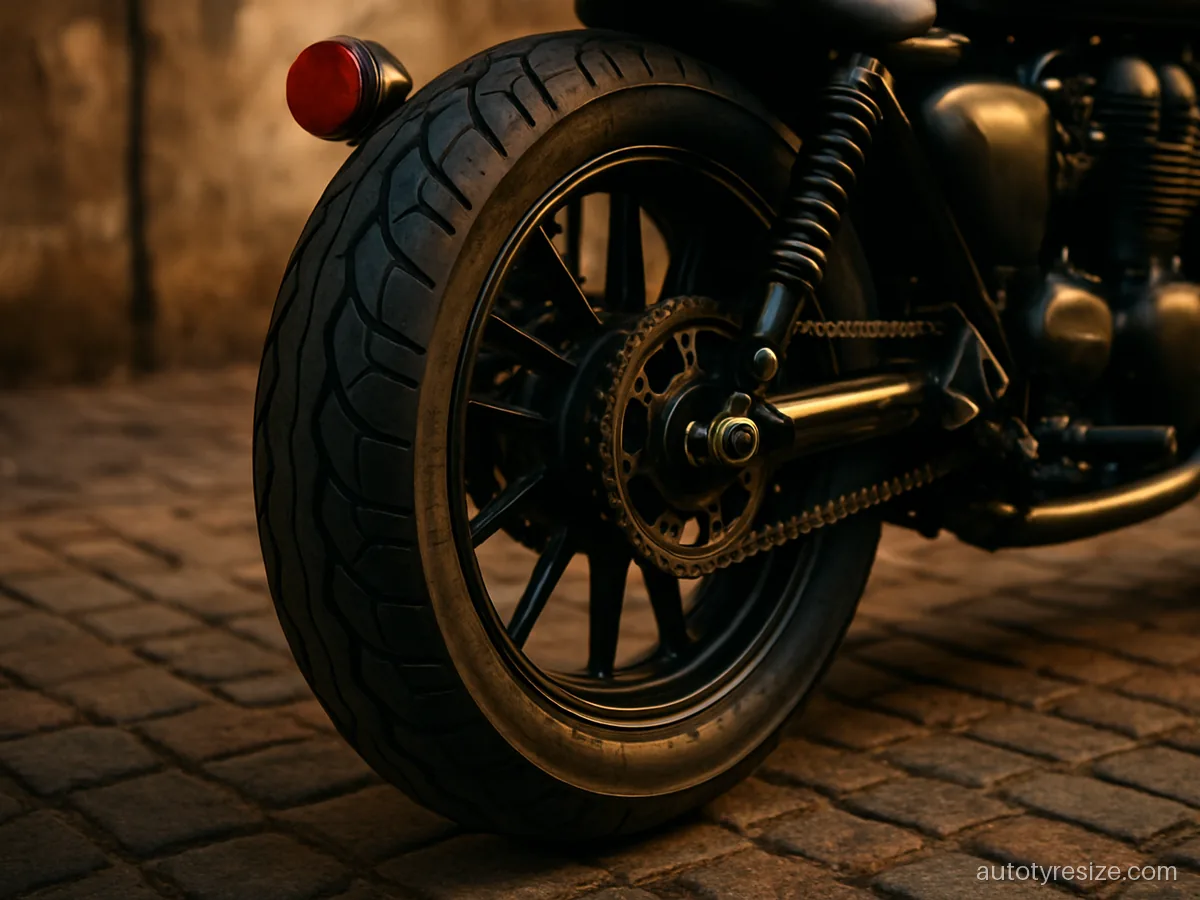
Yamaha XSR 155 tyre size table
| Position | Size | Type | Wheel |
|---|---|---|---|
| Front | 100/80-17 | Tubeless, bias | 17 inch alloy |
| Rear | 140/70 R17 | Tubeless, radial | 17 inch alloy |
There is a single version sold here, so every bike uses these sizes. Export bikes for certain other countries carry a 110/70-17 up front instead. If you import parts or read overseas forums, keep that in mind; the bike sold here is set up for the 100/80-17.
Front and rear sizes explained
Front 100/80-17: a 100 mm section with an 80 mm wall, close to 592 mm tall overall. That hyphen in the code signals crossply construction, which keeps the front light and eager to tip into bends.
Rear 140/70 R17: 140 mm wide with a 98 mm wall and radial build, standing about 628 mm. Radial construction runs cooler and keeps a flatter contact patch when the bike leans, which suits the strong mid range of this engine. Yamaha's faired R15 wears this identical pair, which keeps replacements plentiful at any dealer.
Fitting retro or dual purpose tyres
The XSR's classic look tempts owners to fit block pattern tyres. In the same sizes, that is fine for light gravel use, but expect more road noise, less wet grip on tarmac and quicker wear. Resist going wider than stock at the back; a 150 section can foul the chain or swingarm and dulls the steering. Stay radial at the back where possible, because a bias rear alters how the XSR settles mid corner.
Air pressure on the XSR
Spec listings for the local XSR show 29 and 33 psi, front then rear, cold, unchanged with a pillion aboard. Cross check them with Yamaha's handbook, which holds the official values. Check cold, before riding, with a proper gauge rather than a worn petrol pump dial. Read the motorcycle pressure basics and, before buying a gauge, our gauge buying notes.
When to replace the tyres
- Commuter XSRs square off the back tyre's centre long before the front shows wear.
- Tiny ridges hide in the grooves of every XSR tyre; when the surface wears level with those ridges, it is time.
- Cracks on the sidewall or tyres past five years old should be changed, even with tread left.
- A swelling or gash in the rubber means the XSR stays parked pending an expert opinion.
Most nail holes in the XSR's tread take an external plug. Read tyre puncture repair for when a plug is safe.
Other 155 cc and roadster pages
The MT-15 tyre size page covers Yamaha's naked streetfighter, and the Hunter 350 is a popular retro alternative with its own tyre sizes for alloy and spoke versions. For any other motorcycle, browse the two wheeler size directory and its table of models.
Questions owners ask
Which xsr 155 tyre size do I quote at the shop?
Request a 100/80-17 tubeless for the front and a 140/70 R17 tubeless radial for the back.
Is the XSR 155 rear tyre radial?
Correct, the 140/70 R17 out back is radial, while the 100/80-17 steering tyre is crossply.
Will a 150 width rear suit the XSR 155?
Better not. Chain and swingarm clearance get tight and the steering turns lazy. Keep 140/70 R17.
Do XSR 155 and R15 share tyre sizes?
They do. Both run a 100/80-17 steering tyre and a 140/70 R17 driven tyre, so stock from either suits the other.
How many psi does the XSR 155 need?
Spec sheets quote 29 psi for the front tyre and 33 psi for the rear, set cold. Yamaha's handbook has the final word.