
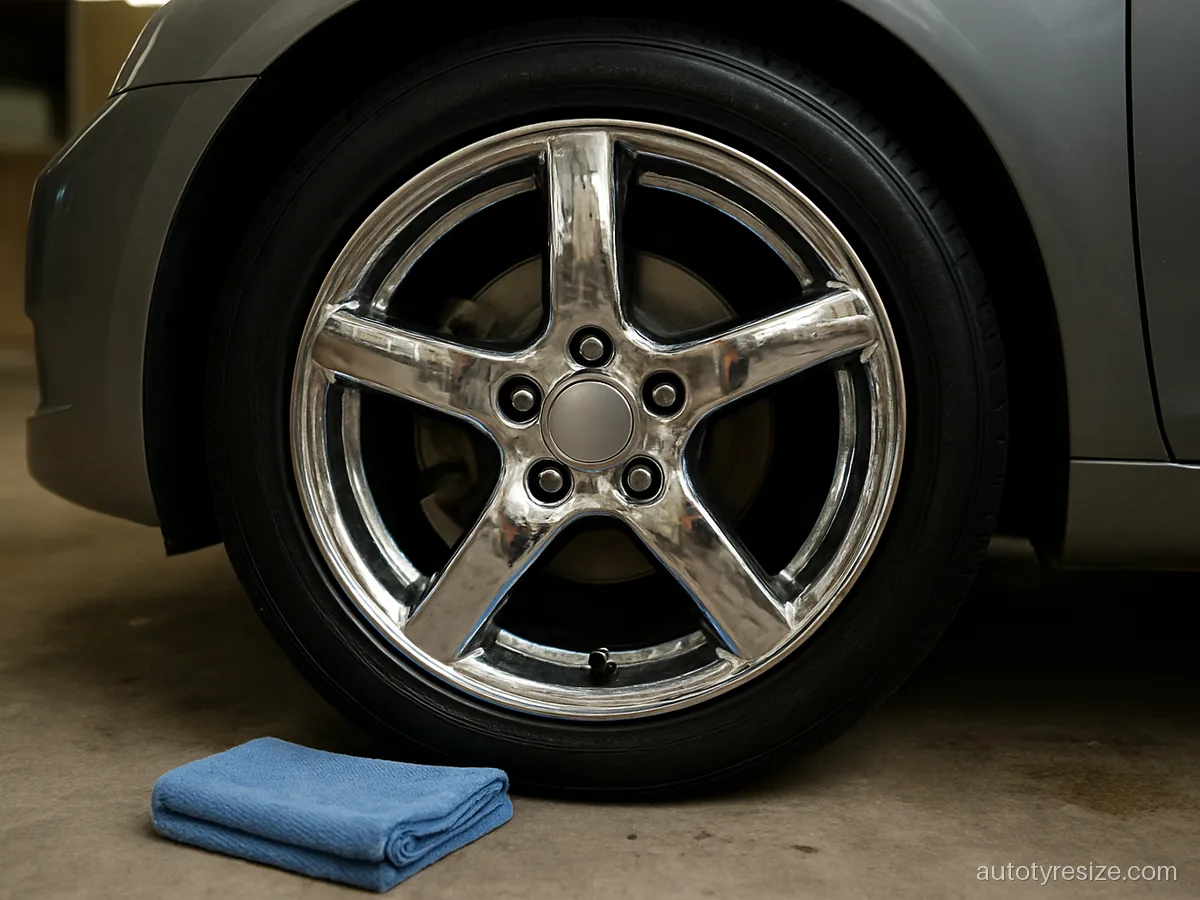
Chrome alloy wheels are aluminium alloy wheels given a mirror finish by electroplating layers of copper, nickel and a very thin chrome skin over the metal. They catch every eye in a parking lot, but they ask for more care than painted or diamond cut wheels.
We see two kinds of chrome wheel owners at the shop: those who wash and dry them every week and keep them gleaming for years, and those whose wheels start pitting after one monsoon. This guide explains why, what the cheaper chrome look options are, and what repair can and cannot do.
At a glance
- What they areAluminium alloy wheels coated with copper, nickel and a thin chrome top
- Look alikesVacuum coated chrome, chrome effect paint, chrome wheel covers
- StrengthMirror shine that wipes clean easily when the coat is sound
- WeaknessPitting and peeling; scratches cannot be touched up
- CareWash cool, mild soap, soft brush, dry fully, no abrasives
- RepairStrip and recoat at a specialist; bends risk cracking the coat
Inside the finish of chrome alloy wheels
After casting and machining, the bare wheel is degreased and dipped in a series of baths. A copper layer goes on first to fill fine pores, then one or two nickel layers that give the deep shine and most of the corrosion protection, and last a chrome layer so thin it mainly adds a hard, bright skin. If the prep under all of this is poor, the coat can lift later.
Since the finish is several metal layers deep, a chip goes through to the nickel or copper below, and you cannot touch it up with paint as you can on a silver wheel. See our alloy wheels guide for how other finishes compare.
Chrome look options compared
| Option | How it is done | What to expect |
|---|---|---|
| Electroplated chrome | Copper, nickel and chrome baths | Deepest mirror; heaviest care need; costly to redo |
| Vacuum coated chrome | Thin metal film applied in a vacuum chamber, then clear coat | Bright and lighter; repairs still need a specialist |
| Chrome effect paint | Special silver paint and clear coat | Less mirror like; easier to repair |
| Chrome wheel covers | Plastic covers on steel wheels | Cheapest look; no change to the wheel itself |
Steel wheel cars can get the shine with chrome finished covers; our wheel cap page explains sizes.
Why chrome alloy wheels pit and peel
- Moisture under the coat. Once a stone chip or kerb scrape breaks through, water and salt creep under the layers and the aluminium starts to corrode. Small blisters and dark pits follow.
- Brake dust. Hot brake dust settles on the barrel and spokes and, left for weeks, eats at the surface.
- Coastal and monsoon air. Salty humid air in seaside cities speeds up pitting on any exposed spot.
- Poor preparation. Flaking in sheets on a fairly new wheel usually points to a fault in how the coat was applied, not to the owner.
- Harsh cleaners. Strong acid or alkali wheel cleaners and wire brushes can damage the surface and any clear coat.
Care routine for a mirror finish
- Let the wheels cool before washing, so cleaner does not dry onto hot metal and streak.
- Rinse off loose mud and grit first so you do not scratch while scrubbing.
- Car shampoo with a dedicated wheel mitt is enough; skip acid based wheel products.
- Rinse and towel each spoke dry so hard water leaves no marks.
- Seal with a wax or wheel sealant made for chrome every few weeks.
- After driving through floodwater or muddy village roads, wash the wheels the same day.
Do not use rubbing compound, steel wool or kitchen scrubbers. The chrome skin is very thin and a scratch through it is permanent.
Can chrome wheels be repaired
Small scratches cannot be polished out once they reach the nickel. Pitting can be reduced but not removed by polishing. A proper fix means stripping the old layers in a specialist workshop, repairing the alloy, and electroplating it again, which takes time and is far costlier than repainting a silver wheel.
Bent chrome wheels are tricky. Straightening a rim lip can crack the hard coat around the bend, so the wheel may come back true but marked. Cracks in the alloy itself mean the wheel should be replaced, whatever its finish.
Are chrome wheels right for you
Chrome alloy wheels suit an owner who parks under cover, lives away from the coast, and enjoys a weekly wash. For a daily car on broken roads, black alloy wheels or a diamond cut finish are easier to live with. Whatever the finish, the size rules do not change: correct PCD, centre bore, offset and a tyre that keeps the overall height. Use the PCD calculator and confirm the load rating before buying.
Chrome on two wheelers
Many classic style motorcycles use chrome spoke rims rather than chrome alloys. The same enemies apply: rust spots on the rim and spokes after the rains, and rust that spreads from chips. Wipe them down after wet rides and keep the spoke nipples clean. If you are deciding between styles, the spoke or alloy comparison lays out the trade offs.
Questions owners ask
Do chrome alloy wheels rust?
The aluminium underneath corrodes rather than rusts, but once the coat is chipped, moisture gets under it and pits and blisters appear. Keeping the finish intact and clean prevents most of this.
Are chrome wheels heavier than painted alloys?
The coat itself is thin. Wheel design and size decide weight far more than the finish does.
How do I clean chrome alloy wheels?
Once they cool, use shampoo and a soft wheel mitt, rinse, towel dry, then protect with a chrome safe wax from time to time.
Can peeling chrome be fixed?
Not by touch up. The wheel has to be stripped and recoated by a specialist. If a new wheel peels, raise it with the seller, as it often points to a fault in how the coat was applied.
Is chrome effect paint as good as real chrome?
It is less mirror like but easier and cheaper to repair, and it handles kerb scrapes better. Many owners find it a sensible compromise.